I began my walk around 10:45 on a moderately overcast and humid Wednesday morning. Standing on the corner of Washington and 4th Street E, I wondered silently how this little experiment would go. I put my phone on “Do Not Disturb,” grabbed my pen and small notebook out of my back pocket, and set off.
I began walking south along Washington St. To my right hand side was a large public parking lot, buffered by small shrubs. To my left, was a residential area which extends east, eventually butting up against Carleton’s campus. I walked the length of the block, accompanied by the sounds of crickets, whose presence in the bushes was only made known by their chirping. At the end of the block, a pastel blue and red-trimmed church, with large triangular windows caught my eye. Unsure if it was outside of my two block area, I decided to cross the street anyway to take a look. While the congregation of All Saints Episcopal Church began in 1858, this “Prairie Gothic” style church was first constructed in 1866. Directly beside the church was a small open area filled with grass that blew gently from side to side in the hot wind. What at first seemed to be an open lot, turned out to be a small-scale prairie planting.
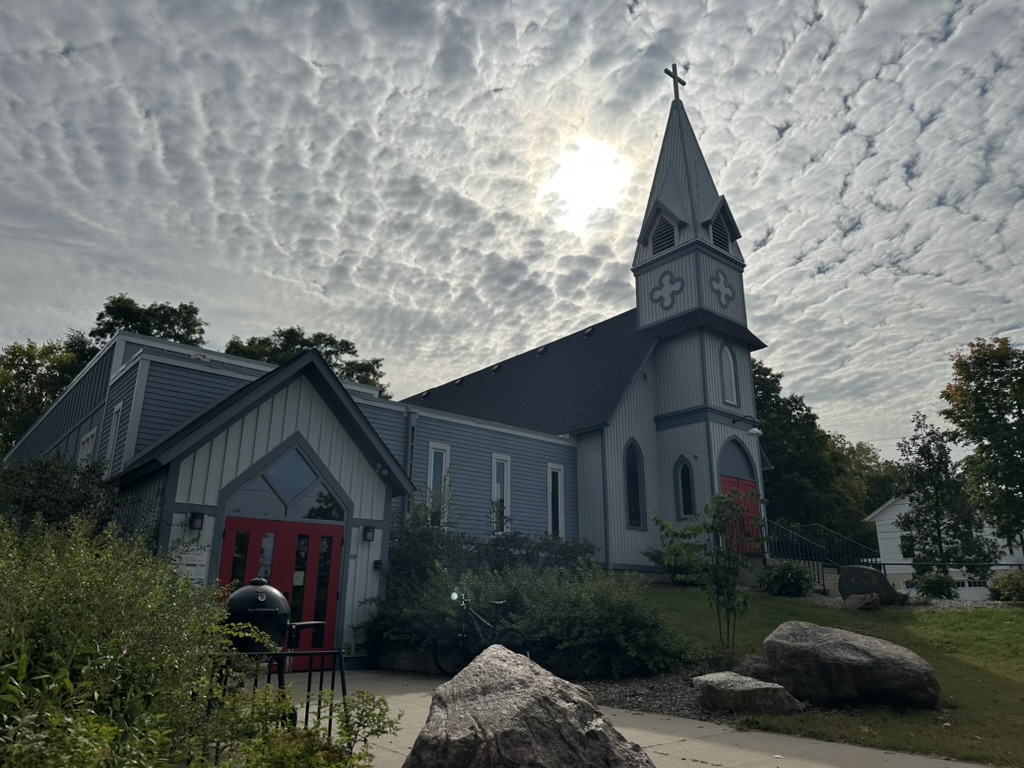
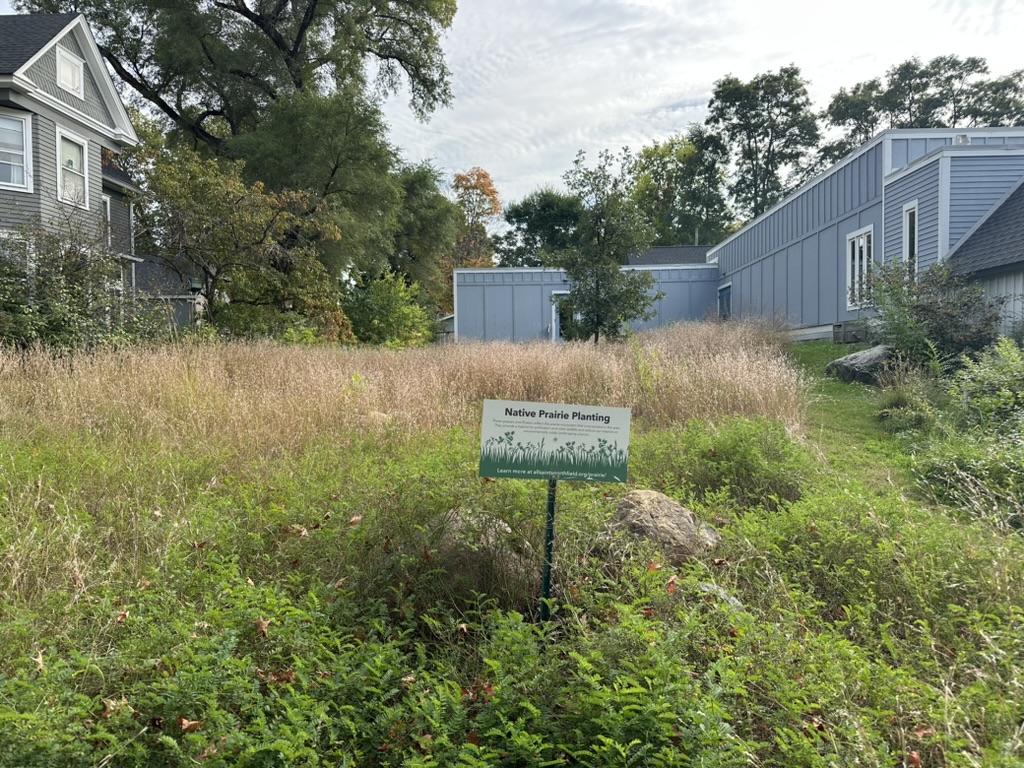
All Saints Episcopal Church & native prairie planting
At the corner, I took a left onto 5th St. E., heading west toward the Cannon River. I continued for approximately half a block until I came to Grastvedt Ln., which separated the parking lot from the rest of the city block. I made a quick detour, turning north to explore. Along the lane, there was a small antique store, Market 416, which sat squarely in the middle of the block. Though it was closed (I’ll definitely be back to check it out), I appreciated the rusted bicycle which hung above the store entrance. At the end of Grastvedt Ln., I intended to walk briefly back to my starting point to see the entirety of this half of the block. I thought better of it when I saw a painter who, at that moment, was about three stories off the ground on a ladder and had covered the sidewalk with tarps. He was playing “More Than a Feeling” by Journey on a small portable speaker. I took the hint and left, not wanting to cause an accident.
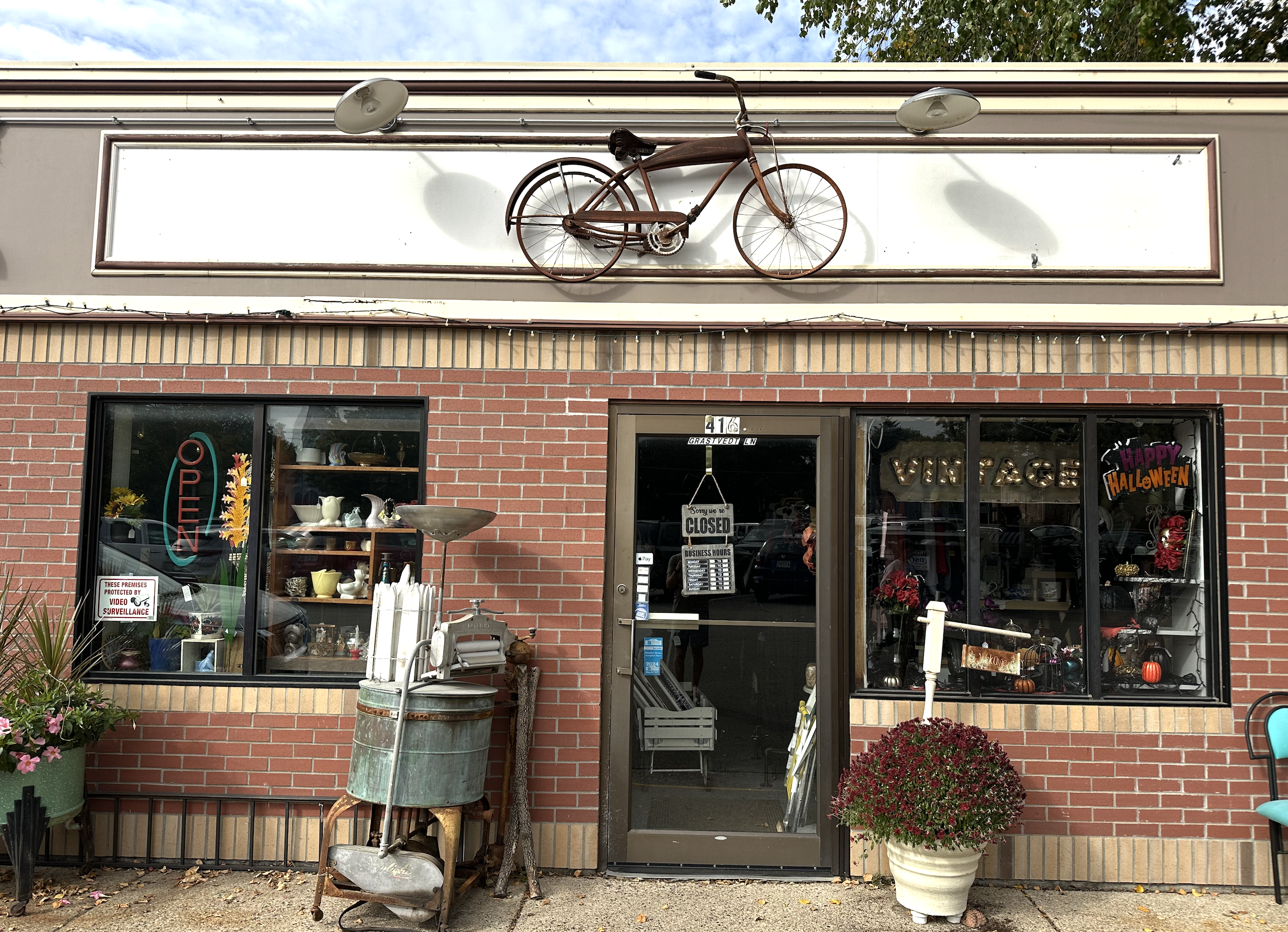
Market 416
Making a one hundred and eighty degree turn, I headed down 4th St. E toward Bridge Square. I passed the Dominos, but stopped briefly to admire the “Love” mural painted by Brett Whitacre on the side of the restaurant. Just past the restaurant, I noticed a small alleyway with what I could only describe as a large green and black port at the end of it. This port turned out to be a boiler made by William Brothers Boiler & Manufacturing Company. According to the company’s catalog, the boiler was likely manufactured sometime around 1915 on Nicollet Island in Minneapolis.
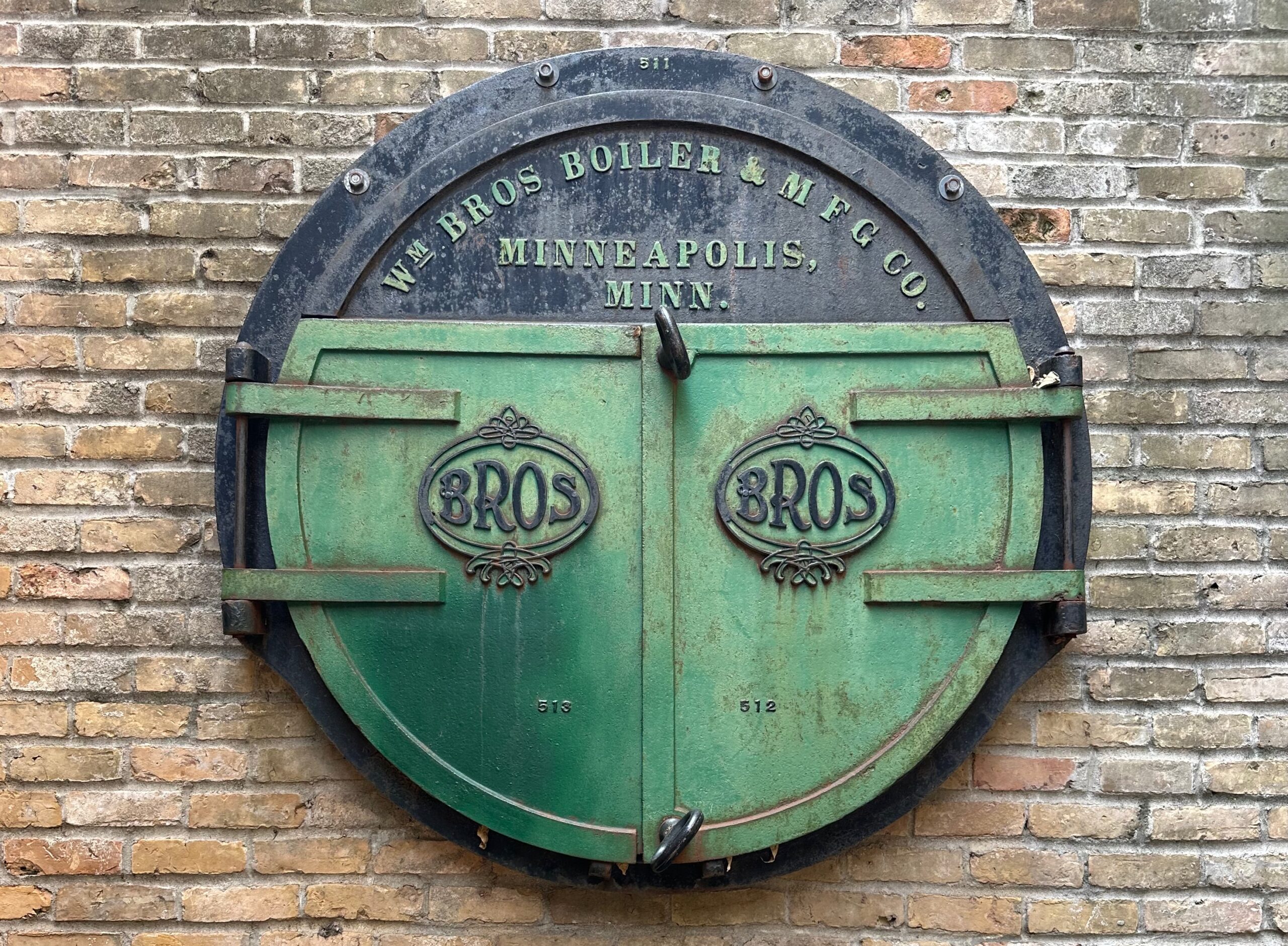
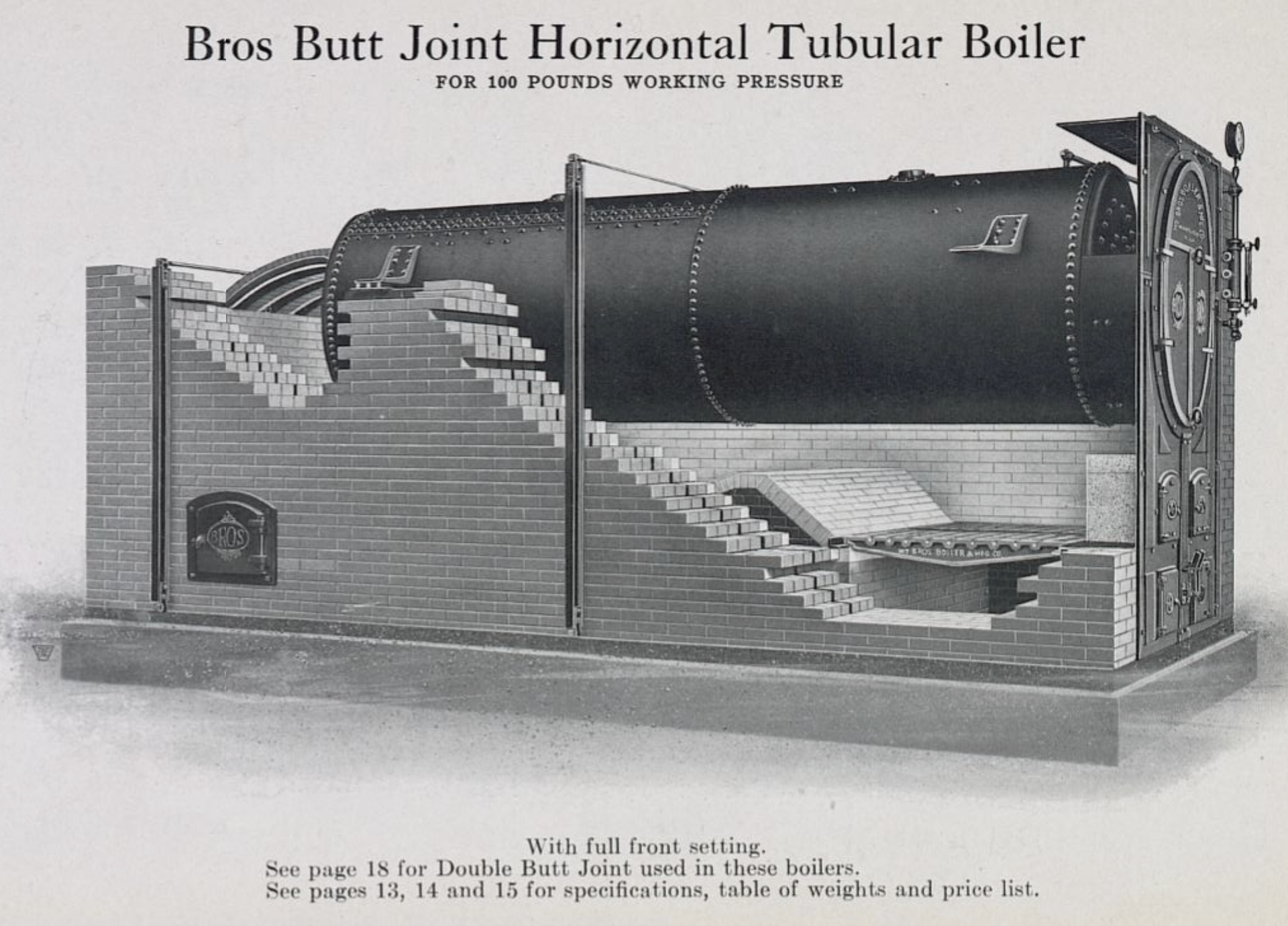
Boiler & original drawing from catalog
After puzzling over the boiler, I crossed Division St., and arrived at Bridge Square. I took a moment to sit down on a park bench and take in the sights around me. Though the weather has mostly remained warm, the maple trees were beginning to turn from green to shades of orange and yellow, betraying how close winter truly is here in Northfield. The square, though small, contained two substantially sized sculptures – one a bronze fountain, the other one being a marble obelisk dedicated in 1921 to Union soldiers who fought in the American Civil War. Surrounding both sculptures was a recent war memorial that had been put in place. Individuals working to draw attention to the deaths of children in Gaza had used chalk to write the names of those who have died during the course of the war. Though the square was pleasant, I decided I had better get moving.
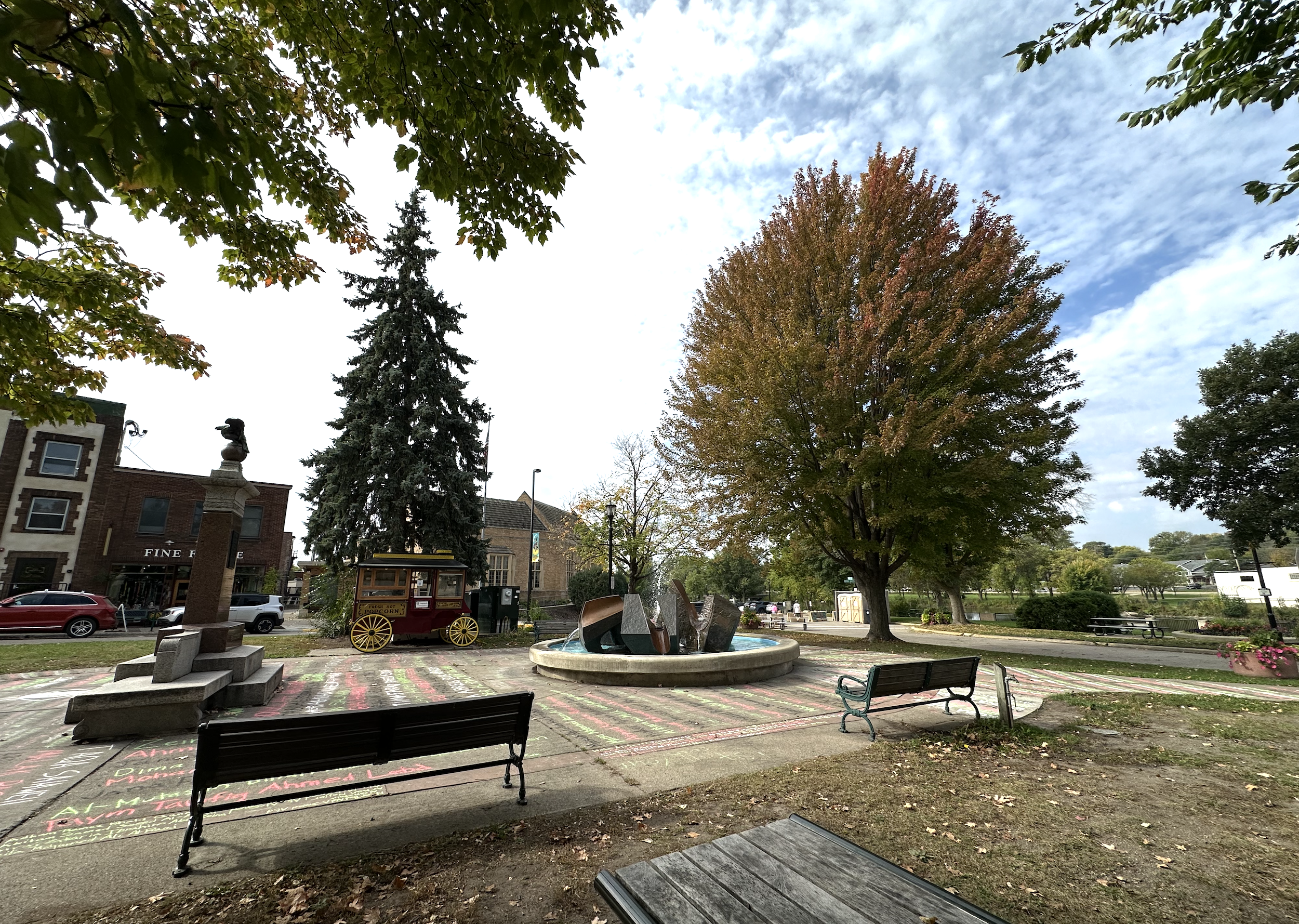
View of Bridge Square
I crossed the street to the western side of Division St., where I found myself in front of the Scriver Building. This rough cut stone structure, with arched windows, and green wood trim, is home to the Northfield Historical Society, and the original First National Bank. The building, first constructed in 1868, is best known for one particularly substantial moment in local Northfield history. At approximately two in the afternoon on September 7, 1876, the James-Younger gang rode into Northfield, intent on robbing the First National Bank. One eyewitness, Francis Howard, who was on the 4th St. Bridge, recalled a conversation with a fellow bystander, stating, “‘Stacy, those gentlemen will bear watching,’ and he replied he thought so too.” After dismounting in town, three members of the gang – Frank James, Charlie Pitts, and Bob Younger – entered the First National Bank. Upon realizing a robbery was underway, J.S. Allen, a local storeowner alerted the public, shouting, “Get your guns, boys! They are robbing the bank!” In that moment, the street erupted into chaos, with two other men in the gang remounting their horses and firing their guns into the air to prevent interference in their raid. In the process, one man, Nicholas Gustavson, was killed. Gunfire from local residents was returned, killing two members of the James-Younger gang: Clell Miller and William Stiles. Inside the bank, little fared better. James Lee Heywood, a banker on duty, refused demands to open the vault. One witness inside the bank, F.J. Wilcox recounted that, “One [robber] pulled out a knife, drew Heywood’s head back… the knife … [leaving] a slight scratch.” Following this, they struck Heywood on the head with the butt of a pistol, sending him to the ground. As Heywood stood, and the gang in the bank realized the chaos outside, they shot and killed the banker, leaving with a mere $26.70. Thomas Hughes, a Carleton student during the time of the robbery, reflected on the event in a letter home to his parents: “But at least you see they did not gain much by raiding Northfield. [The gang] lost two killed, two wounded and three horses, and since all their horses have been taken, and after all their trouble they did not get a cent.”
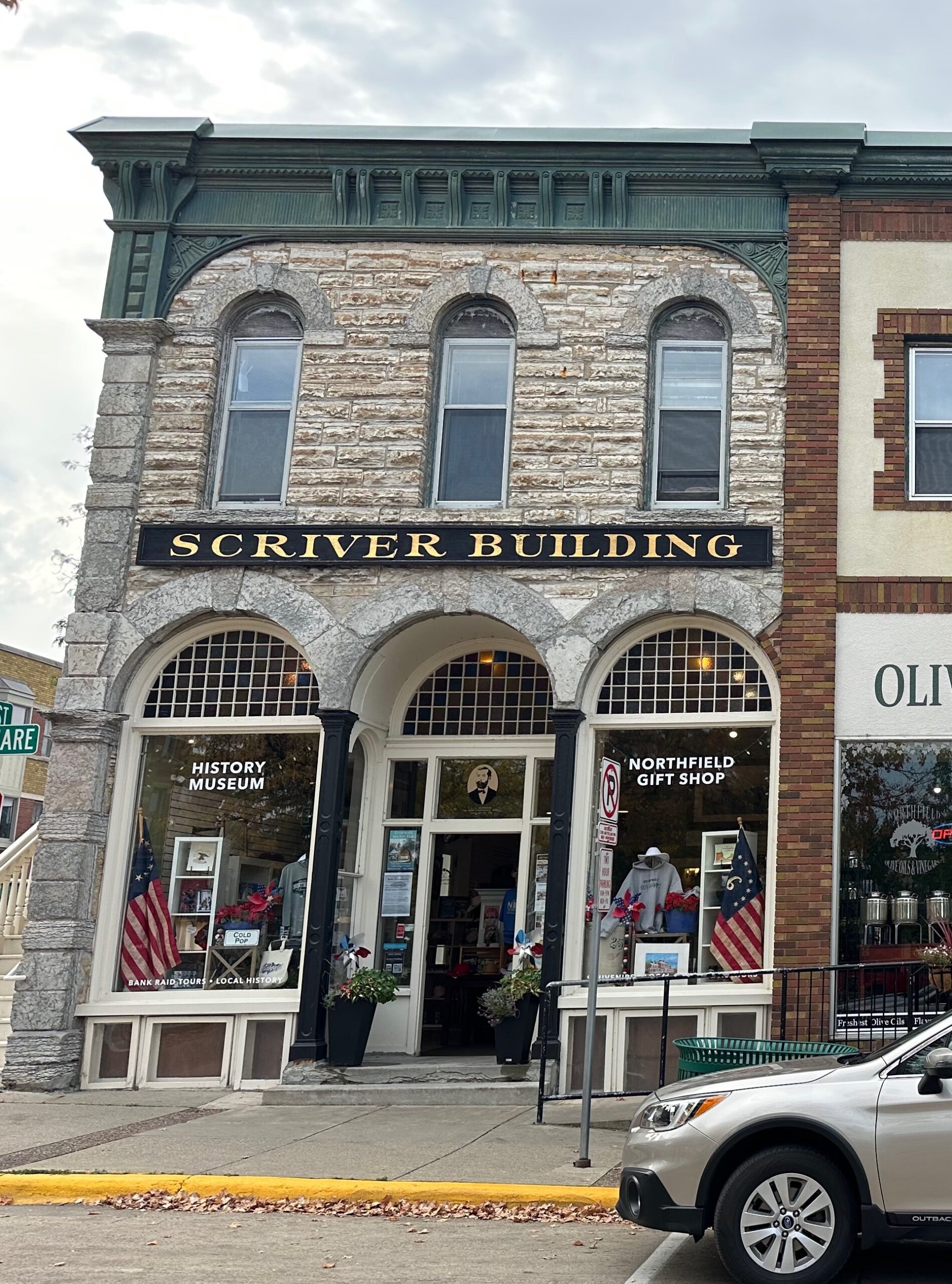
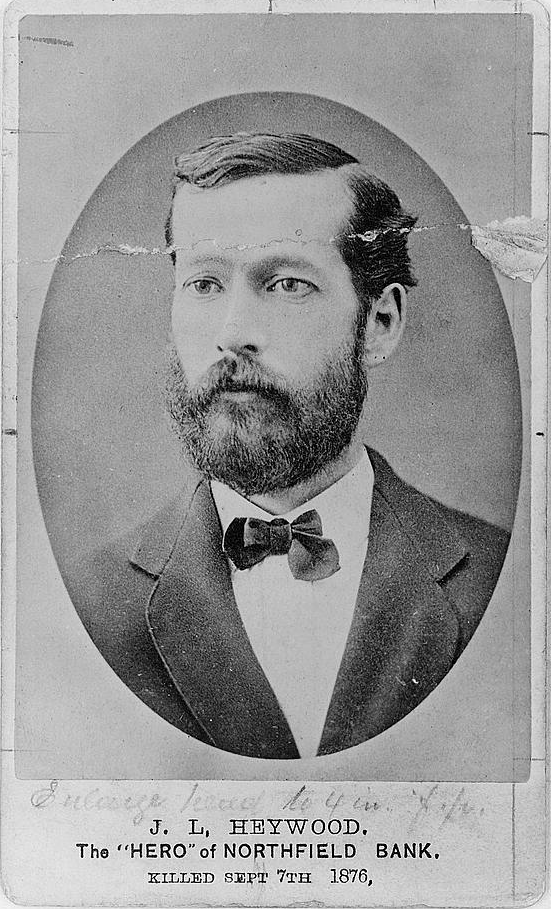
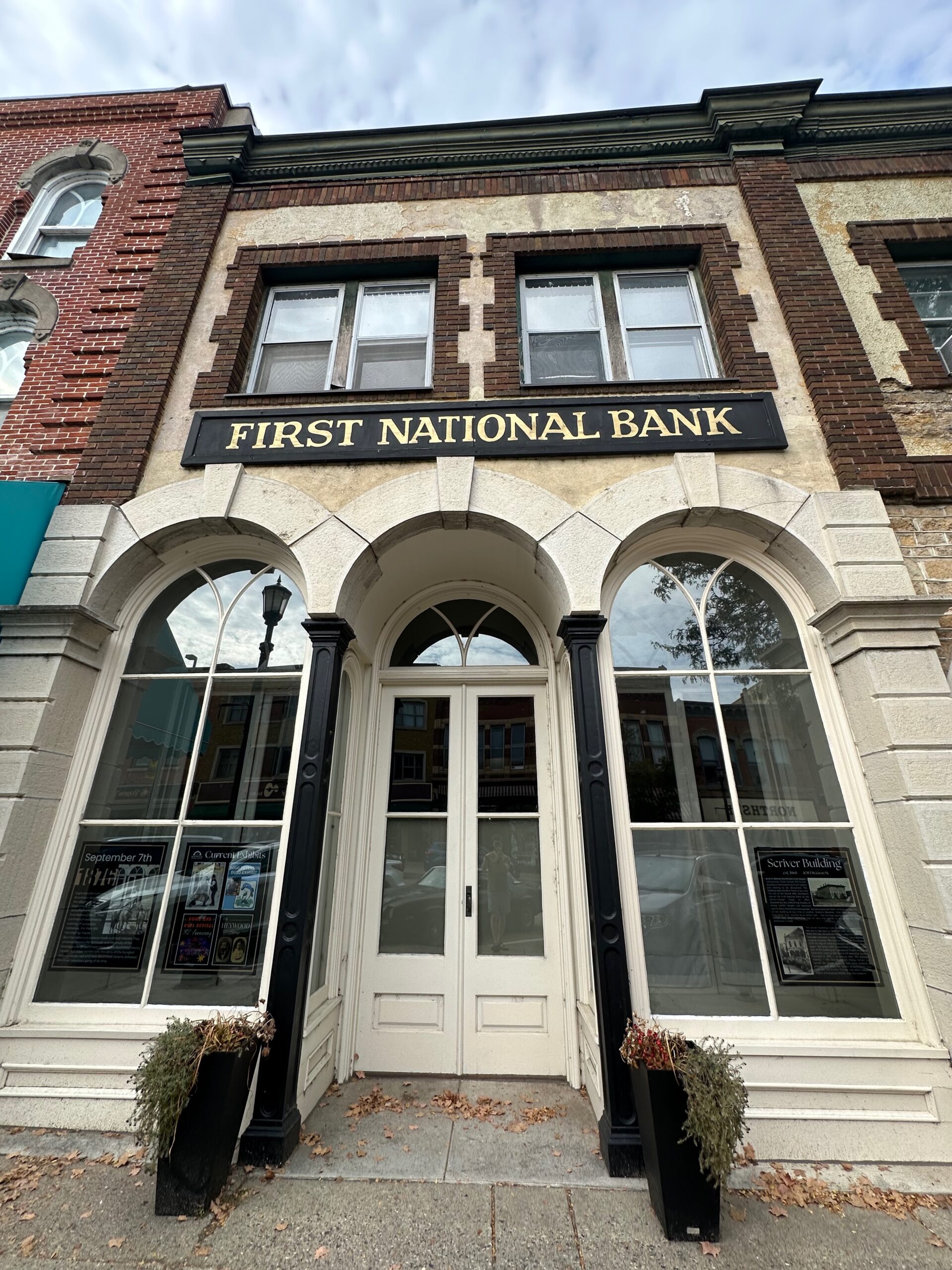
Scriver Building, First National Bank, Portrait of James Lee Heywood
In the museum, a small tour was underway. With one ear open, I followed along as I browsed over the informational plaques regarding the attempted robbery, display cases of saddles and firearms, and a section of the exhibit dedicated to the “Defeat of Jesse James Day” – celebrations which are held annually in town to reenact the robbery and remember Heywood. I then passed into the back of the museum, where the curators have recreated the original bank room.
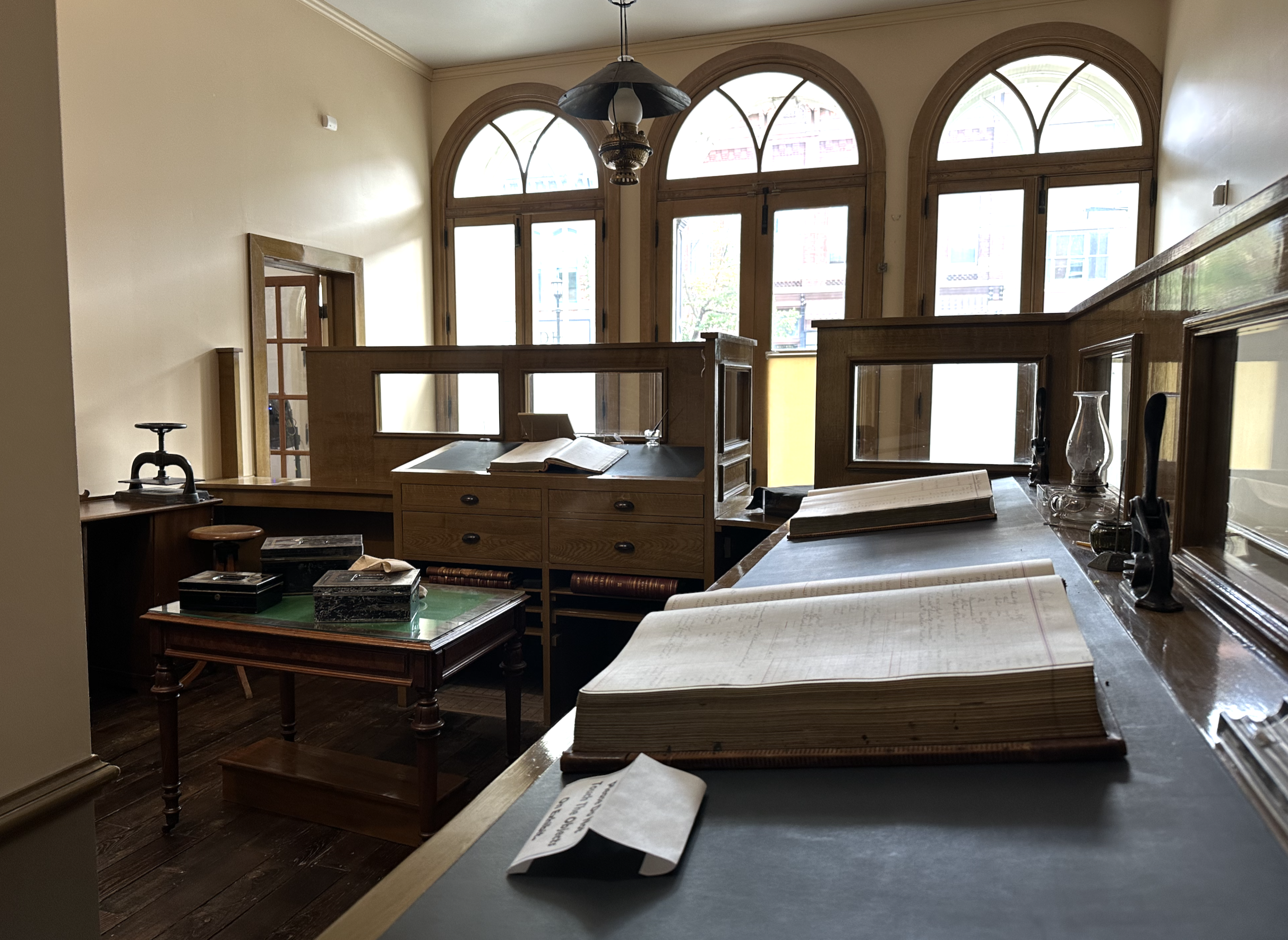
The recreated bank room inside of the Northfield Historical Society Museum
Leaving the museum, and feeling more grounded in the history of Northfield, I made my way south along Division St. Beyond the First National Bank, Division St. has no shortage of history. I walked past the Robin’s Egg Bakery (more on this location in a moment), an antique shop, and an aquatic pet shop which is located inside of the Kingman Building, originally constructed in 1889 and home to some of Northfield’s earliest meat suppliers.
I decided to pop into Makeshift, a small store which makes art and accessories out of repurposed materials. I took a quick pass through the shop and introduced myself to Jeanie who was working at the register. After explaining my project, she told me that her building had originally been an alley that was later converted into a storefront. This likely took place sometime before 1889, when the building was first listed as a private courier service under the ownership of J.F. Prior. In the coming years it ranged in use from a cafe to a jewelry store. Given that it was originally an alley, Jeanie explained, there was no second story unlike many other buildings on Division. Before leaving, Jeanie asked me if I had been into the Robin’s Egg. I replied that I had not, but wondered what could be inside of the restaurant. She explained that it was home to the state of Minnesota’s oldest extant oven. That was all the convincing I needed, and I headed out the door, backtracking down Division St.
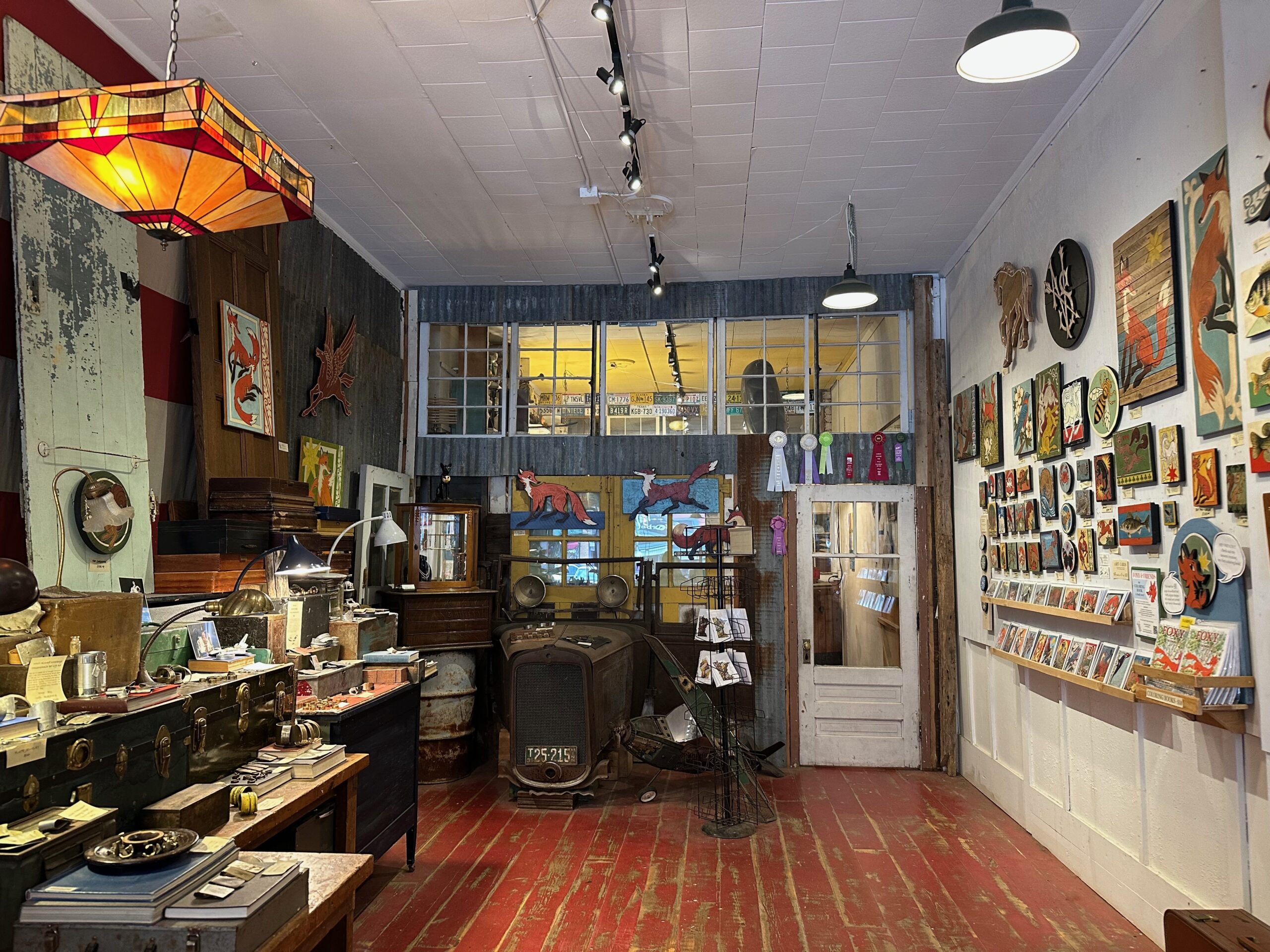
Inside of Makeshift
Entering the Robin’s Egg, I introduced myself to Mckenzie, a Robins Egg employee, and inquired after the existence of said oven. She very graciously told me that while she didn’t know, I could return at a later date to find out more. After putting this on my mental calendar and thanking her for her time, I exited the shop and was greeted with the sound of the train rolling through town at 11:33am.
After arriving at the intersection of Division and 5th St. W., I made a right turn and walked the length of the block, moving quickly downhill toward the Cannon River. At the end of the block, I took another right hand turn on to Water St. S., where I walked along the bank of Cannon, listening to the water flow over a small dam just upstream of Bridge Square. I briefly crossed the street to check out “Harvest,” a bronze sculpture dedicated to the 150th anniversary of Northfield, which was nicely framed by brush along the river and surrounded by lady bugs. The main buildings on this block consist of the McGuire building, built in 1926, and the Northfield Post Office. I had not previously spent any time looking intently at the post office, but I found it to be quite an elegant building, with large bay windows and a two tiered entryway.
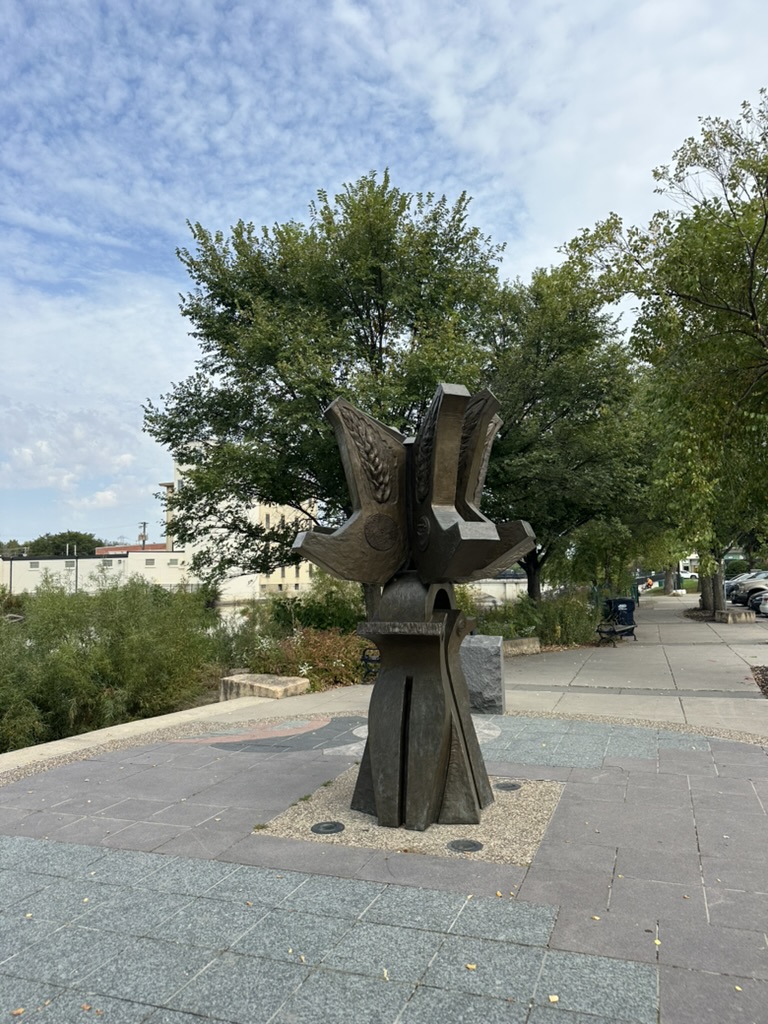
“Harvest” Sculpture
Reaching the end of the block, I was back at Bridge Square and had walked most of my two block section. At this point, I only needed to walk 5th St. E. To get to this location, I crossed the street, walking along the eastern side of Division. Along the way, I decided to pop into Fate Vintage. I was greeted by Mary, one of the twenty vendors who supply the store with various items ranging from ceramics, to clothes, records, and old map prints. While talking with Mary, she let me know that somewhere in the store, they had an old print of the shopfront. After a few minutes of searching, we found the picture sitting on a shelf behind a small lamp and a few glasses. The photo, taken sometime around 1892, shows (from left to right) Ed Schrump, Oscar Olson, E. O. (Red) Barnard, and McChesney standing outside of the Northfield Mercantile Co. A close look at the photo shows a small upper level with a railing inside the building, which, though renovated, still exists today! In coming years, the building would serve a number of functions such as a drugstore and bookstore.
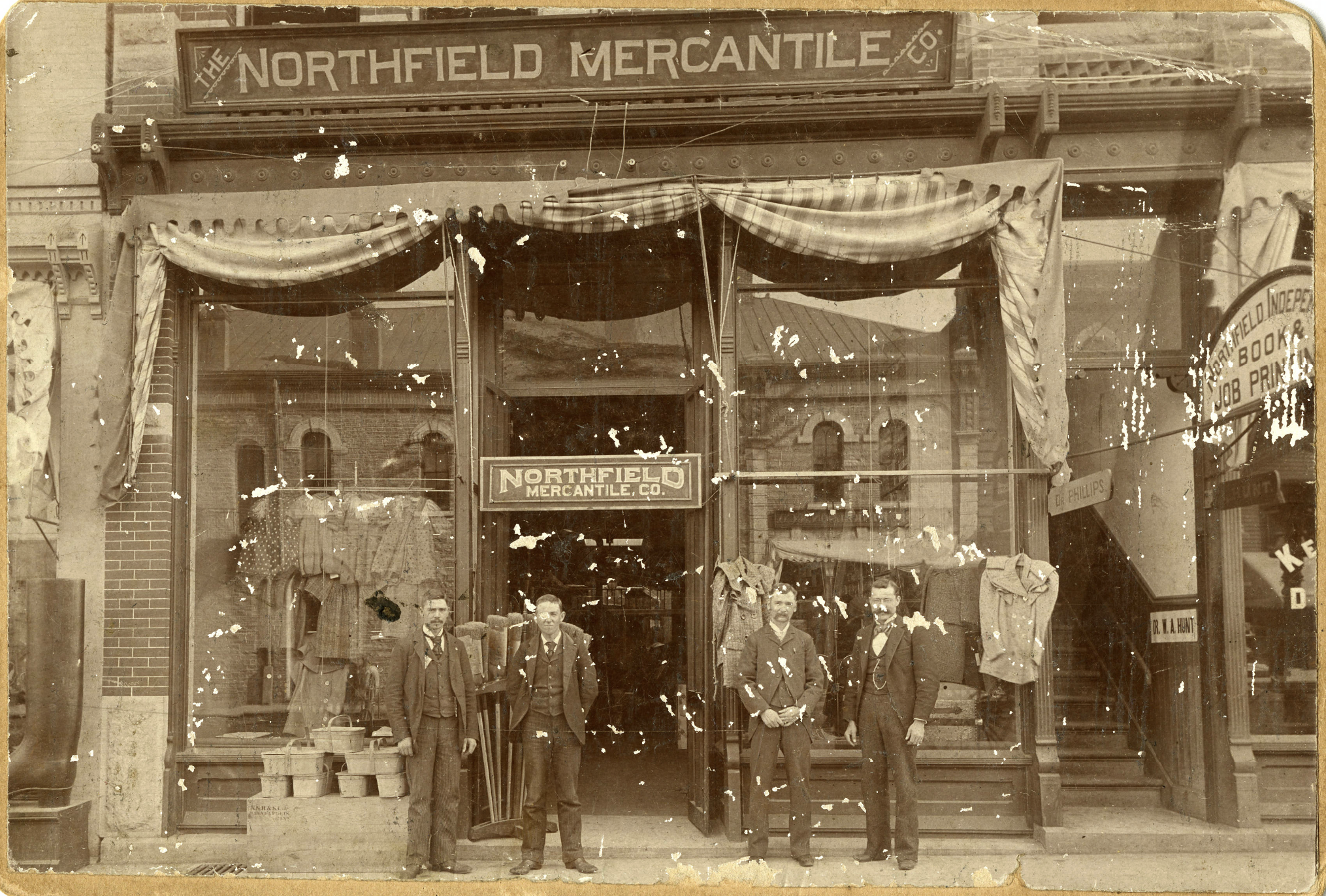
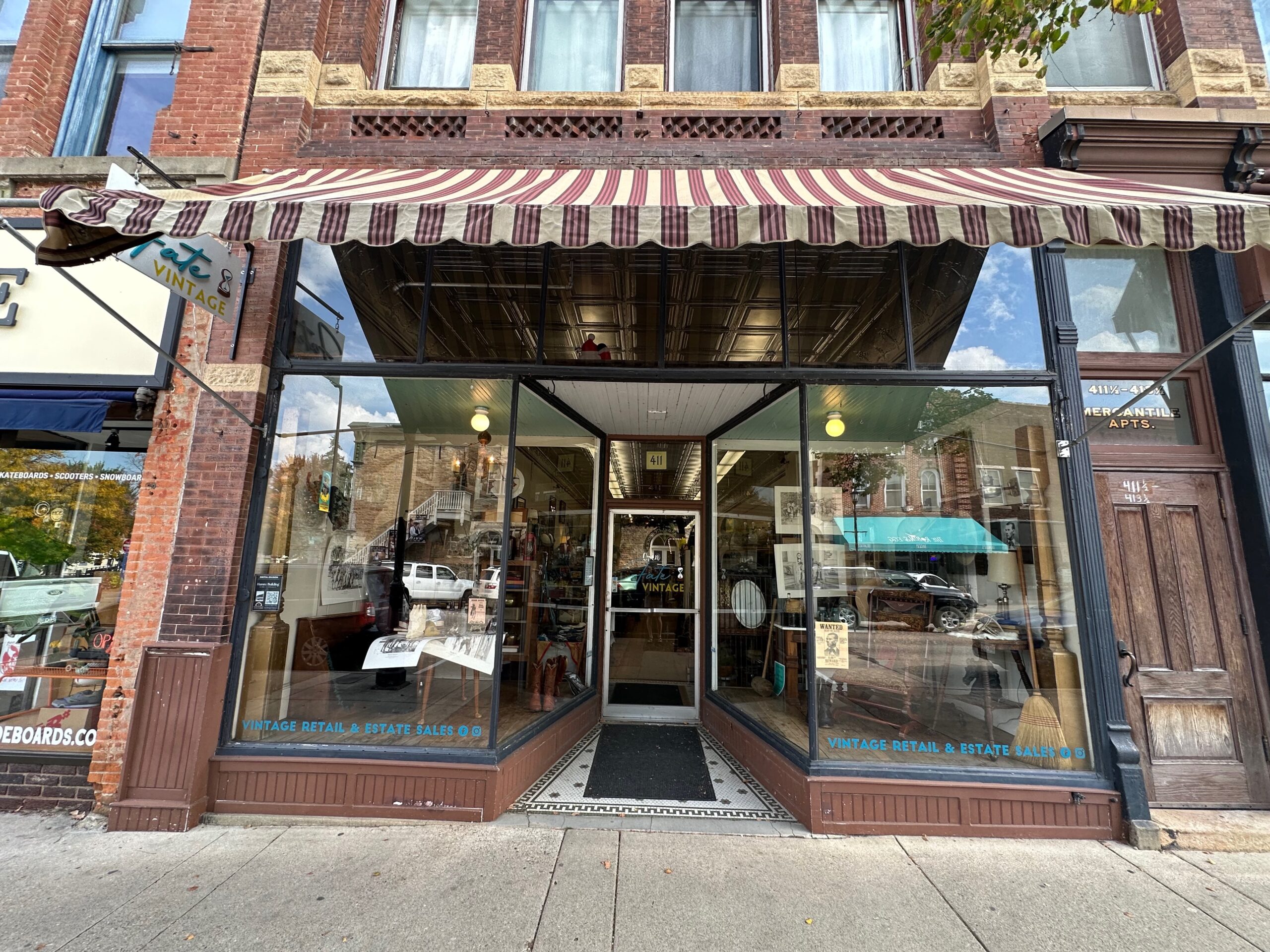
411 Division Street in 1892 and 2025
Leaving Fate Vintage, I looked down at my watch and realized that I had better get going back to campus. I walked the rest of the left hand side of Division St., passing cafes, a record shop, and other local businesses. At the end of the block, I took a left hand turn up 5th St. E. which was lined by small maple trees. I made my way along the side of office and apartment buildings until I got to the intersection of Grastvedt Lane and 5th St. E. where I concluded my walk.

