Alexander Faribault
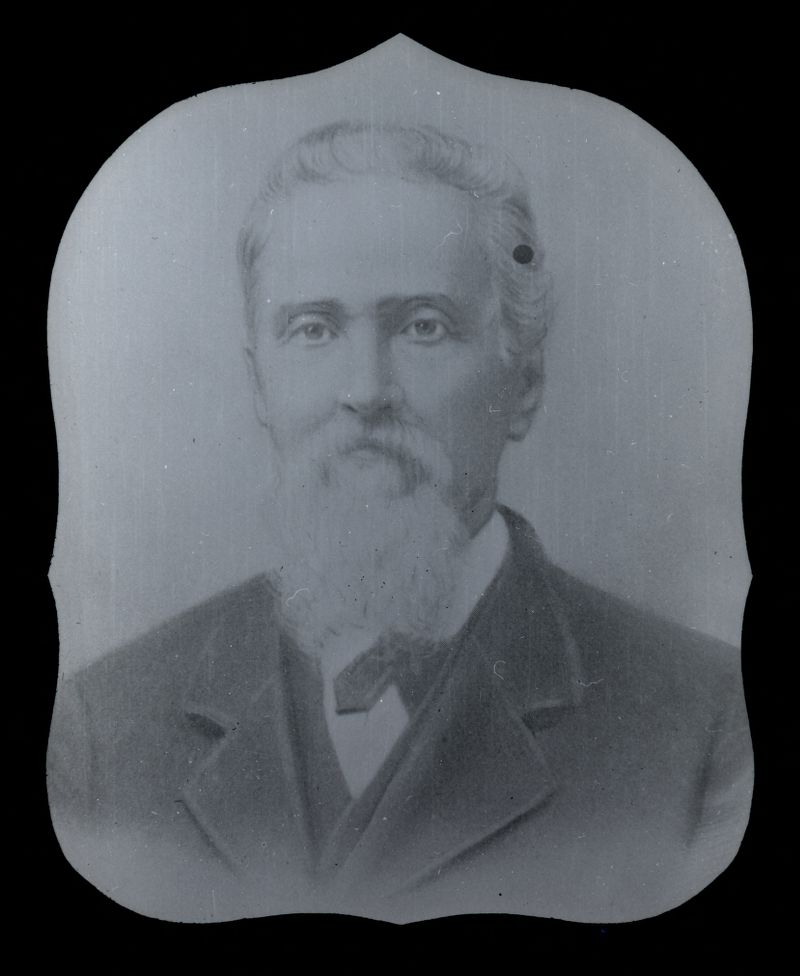
Alexander Faribault was born on June 22, 1806, in Prairie du Chien, Wisconsin.1 He first made his name following in his father’s footsteps as a fur trader. Working for the American Fur Company, some of Faribault’s first trading posts were in St. Peter and on Lake Elysian. However, in 1826, Alexander and a friend and fellow fur-trader, Joseph Dashner, took a trip through the Cannon Valley, including the site of the present-day town Faribault. According to an 1877 article in the Faribault Republican, from the first time that Alexander saw the valley where the Straight River and the Cannon intersect, he became set on living there permanently in the future.2
By 1828, Alexander Faribault was working as a clerk, still for the American Fur Company, out of a trading post on the Cannon River. There, he made $450 a year, but over the next few years, the singular post on the Cannon River expanded to three or four posts near Wahpekute villages.3 According to Franklyn Curtiss Wedge’s 1910 History of Rice and Steele Counties, Faribault “persuaded” some of the Wahpekute to move to Faribault where he wanted to build a new post.4 He would continue as a fur trader for many years, but by 1844, Alexander began a farm in what is now Faribault. This farm had wheat, barley, turnips, rutabagas, 20 horses, 40 cattle, and 300 chickens.5
However, Alexander was squatting on the land, which belonged to the Dakota. By the 1830s, Faribault was close friends with H.H. Sibley, future governor of Minnesota, who brought him along as an interpreter for multiple treaties with the Dakota.6 The Treaty at Mendota in 1851, for which Alexander Faribault served as an interpreter, would legalize Alexander’s ability to farm in the Cannon Valley. Additionally, Faribault received $42,000 from “Traders’ Papers,” in which Wahpekute leaders agreed to pay off debts they owed to fur traders.7 Alexander Faribault’s fur trading practices, as was common for the American Fur Company, would’ve involved a system in which he would sell goods to Dakota citizens on a credit system, with the expectation that they would pay him back with furs later on in the year. According to Richard Steimann’s 1971 research on the Wahpekute band of the Dakota, white traders paid Dakota hunters unfairly low amounts for their furs, but with the expectation that some debts would never be paid back.8 Ultimately, sources disagree on the legitimacy of the “Traders’ Papers,” as they were separate to the Dakota’s treaty with the US government. Some say the Wahpekute leaders were either bribed or tricked into signing these papers.9
It’s true that Alexander Faribault had many friends amongst the Dakota. In 1836, he wrote a letter to H.H. Sibley, asking for him to give “The Black Eagle,” (a Dakota leader, possibly confused with Wambditanka or “Big Eagle”) food after a conflict between the Oceti Sakowin (Sioux Nations) and Meskwaki (Foxes) broke out.10 After the 1851 treaty, many Dakota people continued living in the town Faribault, on land that now was legally owned by Alexander. Even after the expulsion of the Dakota in 1863, Alexander steadfastly defended the five Dakota families that were living by his second Faribault house.11 Still, Alexander Faribault was no doubt an active participant in systems of exploitation, including the fur-trade, which underpaid Dakota hunters for their labor, as well as the treaty process, which forced Dakota bands off of their land, including land that Faribault himself was illegally squatting on. Furthermore, according to Steimann, during the US-Dakota war in 1862, Alexander organized a “volunteer cavalry” in Faribault to “protect” the townspeople.12 The five families who were living on Alexander’s land after the Dakota Expulsion Act were allowed to do so as they were seen as allies to the settlers.
Endnotes
1. Richard J. Steimann, “The Wapacootas and the White Man: The Story of the Early Development of Faribault [By]” (St. John’s University, 1971), 20.
2. Steimann, “The Wapacootas and the White Man,” 51.
3. Steimann, “The Wapacootas and the White Man,” 34.
4. Franklyn Curtiss-Wedge and Stephen Jewett, History of Rice and Steele Counties, Minnesota, with New York Public Library (Chicago, H. C. Cooper, Jr., 1910), 89, http://archive.org/details/historyofriceste01curt.
5. Steimann, “The Wapacootas and the White Man,” 44–45.
6. Steimann, “The Wapacootas and the White Man,” 40.
7. Gwen Westerman, Mni Sota Makoce: The Land of the Dakota, with Bruce M. White (Minnesota Historical Society Press, 2012), 190.
8. Steimann, “The Wapacootas and the White Man,” 21–22.
9. Peter J. DeCarlo, “Treaty of Mendota, 1851 | MNopedia,” accessed November 24, 2025, https://www.mnhs.org/mnopedia/search/index/event/treaty-mendota-1851.https://www.mnhs.org/mnopedia/search/index/event/treaty-mendota-1851; Westerman, Mni Sota Makoce, 190.
10. Steimann, “The Wapacootas and the White Man”; “Wambditanka (Big Eagle) | The U.S.-Dakota War of 1862,” accessed November 24, 2025, https://www.mnhs.org/usdakotawar/stories/history/wambditanka-big-eagle.
11. Steimann, “The Wapacootas and the White Man,” 70.
12. Steimann, “The Wapacootas and the White Man,” 68.
13. Henry Hastings Sibley, Memoir of Jean Baptiste Faribault (1880), 168, https://upload.wikimedia.org/wikipedia/commons/9/92/Memoir_of_Jean_Baptiste_Faribault_%28IA_memoirofjeanbapt00siblrich%29.pdf.
14. Sibley, Memoir of Jean Baptiste Faribault, 173; Catherine Denial, “Pelagie Faribault’s Island: Property, Kinship, and the Meaning of Marriage in Dakota Country,” Minnesota History, 2010, 50.
15. Margaret Vaughan, “Faribault, Pelagie (1783–1847) | MNopedia,” accessed November 6, 2025, https://www3.mnhs.org/mnopedia/search/index/person/faribault-pelagie-1783-1847.
16. Vaughan, “Faribault, Pelagie (1783–1847) | MNopedia.”
17. Vaughan, “Faribault, Pelagie (1783–1847) | MNopedia.”
18. Sibley, Memoir of Jean Baptiste Faribault, 178.
19. Denial, “Pelagie Faribault’s Island,” 6.
20. Sibley, Memoir of Jean Baptiste Faribault, 178.
21. Steimann, “The Wapacootas and the White Man,” 40.
22. “Treaty with the Eastern Sioux, 1820,” 4, accessed November 20, 2025, https://treaties.okstate.edu/treaties/treaty-with-the-eastern-sioux-1820-22484.
23. Denial, “Pelagie Faribault’s Island,” 57.
24. Sibley, Memoir of Jean Baptiste Faribault, 168.
25. Sibley, Memoir of Jean Baptiste Faribault, 168.
26. Sibley, Memoir of Jean Baptiste Faribault, 170.
27. Sibley, Memoir of Jean Baptiste Faribault, 172.
28. Sibley, Memoir of Jean Baptiste Faribault, 174.
29. Sibley, Memoir of Jean Baptiste Faribault, 174.
30. Sibley, Memoir of Jean Baptiste Faribault, 175-178.
31. Vaughan, “Faribault, Pelagie (1783–1847) | MNopedia.”
32. “Jean-Baptiste Faribault | Minnesota Historical Society,” accessed November 22, 2025, https://www.mnhs.org/sibley/learn/jean-baptiste-faribault.
33. Steimann, “The Wapacootas and the White Man,” 64.
34. Unknown, “Winona Herald.,” Minnesota Historical Society (Winona, Minn.), April 23, 1875, 4.35. Richard Williams to Ronald Wilkes, March 29, 2000, Alexander Faribault House Correspondence RE:House, Rice County Historical Society.
