framing the narrative:
introduction to the Alexander faribault house
Click to Expand
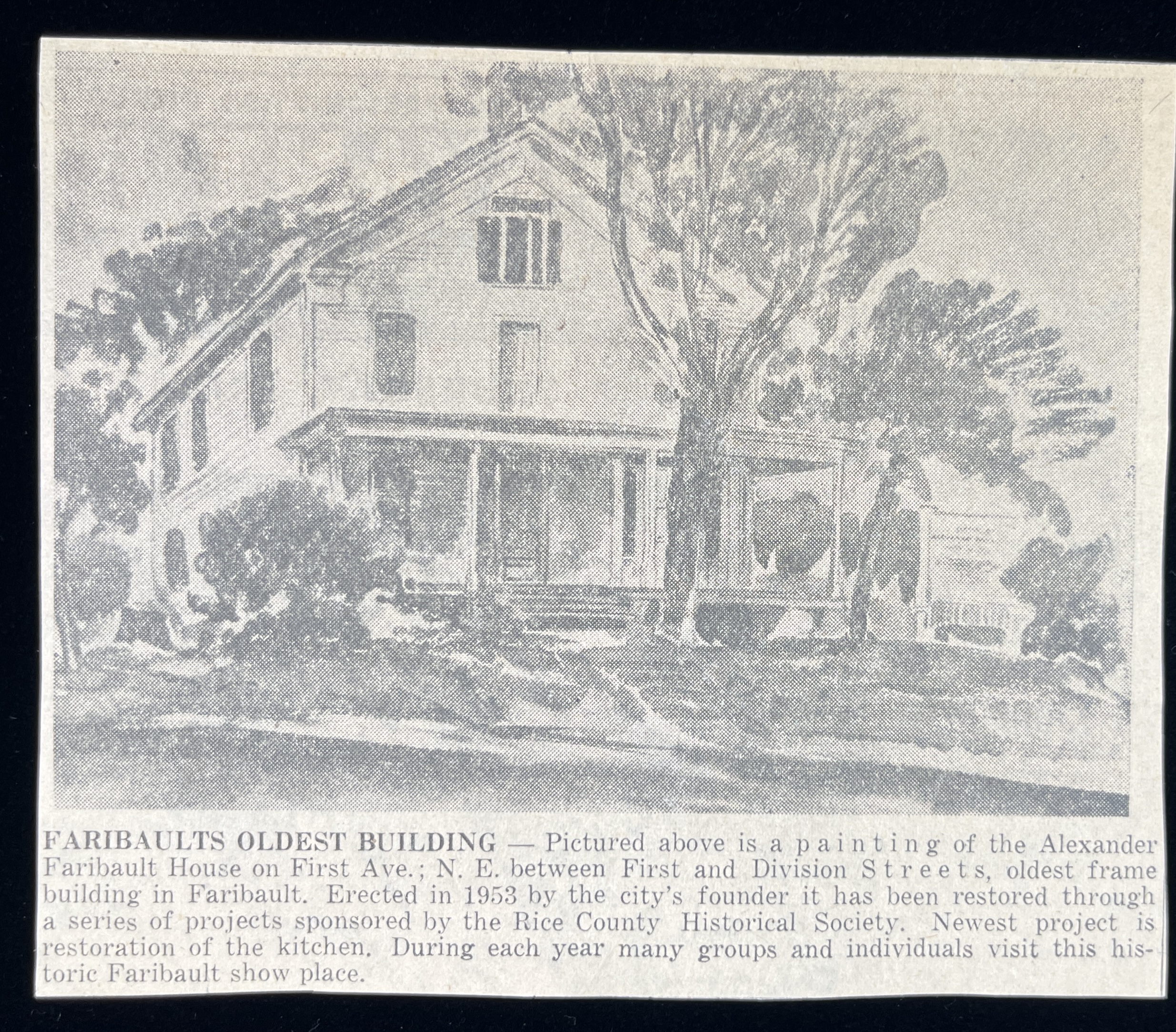
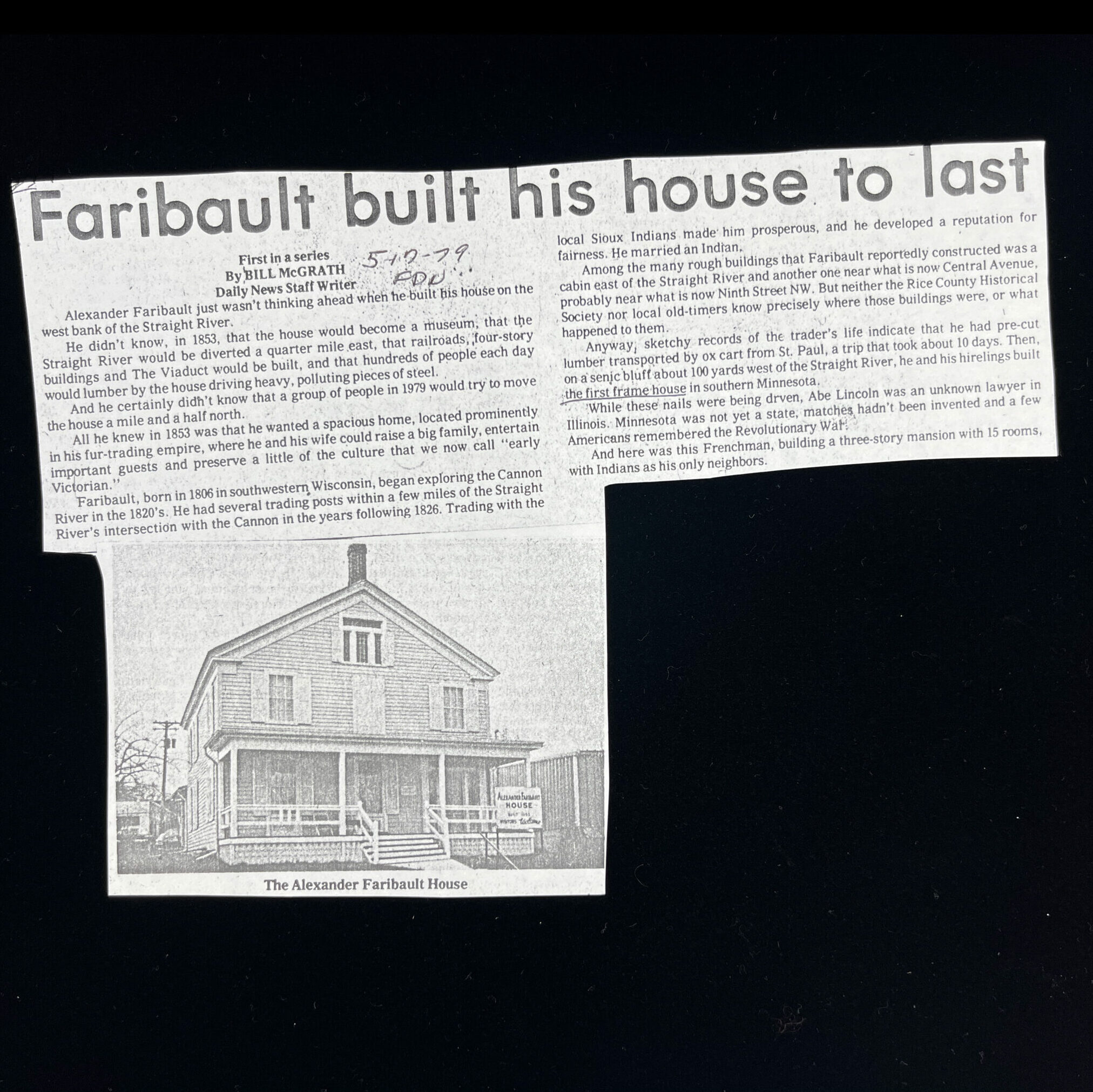
Built in 1853 the Alexander Faribault House was the first frame house of its kind in Faribault, and likely in this region of the state1. Before settling along the Straight River, Alexander was born in Prairie du Chien, a town located along southern Wisconsin’s bank of the Mississippi River. In 1819, Alexander’s Father, Jean-Baptiste Faribault, was a well-regarded French-Canadian fur trader invited at the behest of Colonel Henry Leavenworth to Pike Island, near Fort Snelling, to develop Minnesota’s burgeoning fur trade industry with local Dakota tribes. Jean-Baptiste, along with his wife Elizabeth Pelaigie Haines were both highly knowledgeable about the Dakota, Pelaige herself being of partial Dakota descent2.
Leavenworth had recently ordered troops to the site of Ft. Snelling, constructed a year later, under the command of the US government who hoped to quell any British influence in the far-flung northwest territory following the war of 18123.
Alexander became a licensed fur trader in 1822, later setting up a trading post in 1832 at the confluence of the Straight and Canon Rivers after establishing a series of successful trading posts throughout southeastern Minnesota2. In 1844, Alexander moved this post a mile and a half downstream to the site of downtown Faribault, where he built his frame house2.
1 – Alexander Faribault House – Rice County Historical Society. https://rchistory.org/museum/alexander-faribault-house/.
2 – “Who Was Alexander Faribault? · History of Faribault · Religions in Minnesota.” Accessed November 6, 2025. https://religionsmn.carleton.edu/exhibits/show/history-of-faribault/building-a-community-together-/who-was-alexander-faribault-.
3 – Henry Leavenworth | The U.S.-Dakota War of 1862. https://www.mnhs.org/usdakotawar/stories/history/henry-leavenworth
Community Conservation:
on the grassroots effort to save the frame house on 1st
Click to Expand
“To preserve and restore the home that he built in order to keep his name and memory before us as a record of his generous assistance to the early beginnings of our institutions would seem to honor ourselves not less than to honor him.”
Mrs. Charles S. Batchley of the Publicity CommitteeSee Note 1
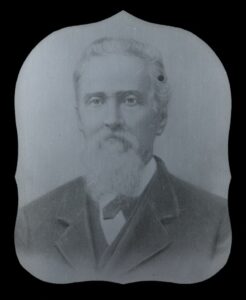
In 1874 discussions on a formal monument to Faribault’s founder first began at meetings of the recently organized Old Settler’s Association. These discussions spanning into the turn of the century settled on restoration as the best way to both preserve the legacy of Alexander Faribault, and tell his story to the wider community4.
However, over the course of these discussions, several different visions for what this monument would look like came to the attention of the association. Advocacy of the restoration can be found in the November 30th, 1897 issue of the Faribault Republican; “(…)Faribault’s first abode still exists and is inhabited as a residence. It is the oldest house now in Faribault, having been built in 1854 (1853 by all other accounts -GSA), and was the first frame erection here. It seems a pity that the city fathers do not purchase it before it goes to rack and ruin, and preserve it as a museum or some such useSee Note 2.”
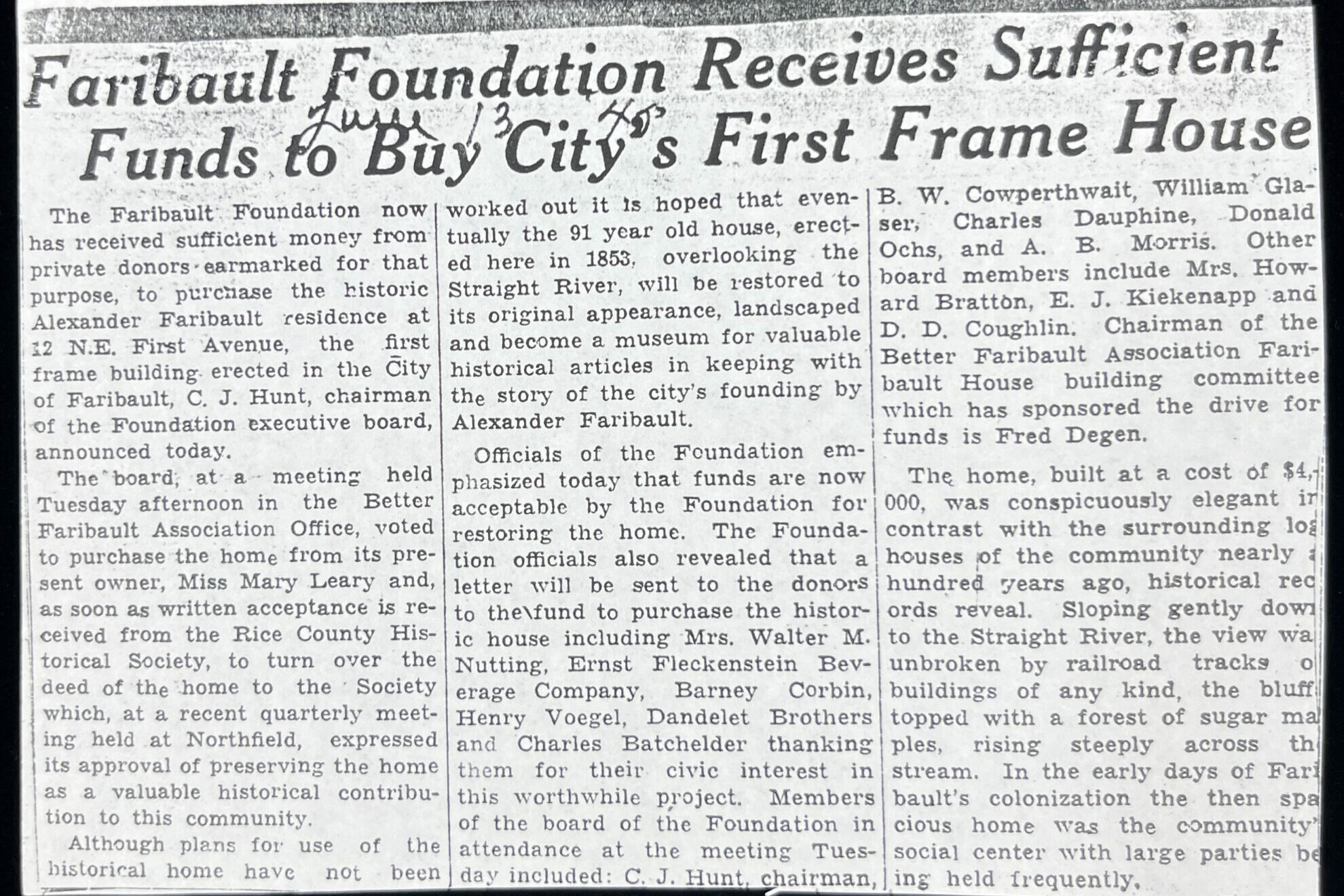
Ultimately what was decided on was a restoration project that would refurbish the house at the site on 1st ave. RCHS came to replace the duties of the Old Settler’s Association, being founded in 1926, and formally acquiring the house from the city of Faribault in 19454.
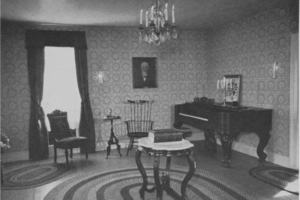
Through a series of fundraisers, drives, and with help from a St. Olaf student group RCHS began work to refurbish the house’s interior in (year). culminating in a public viewing of the interior renovations in 1953. The house was also furnished with period accurate furniture in 19554.Contrasting this work however is the fate of Alexander’s second residence in Faribault located at the current site of the school for the deaf and blind. After Alexander’s death, the property of his second home was purchased in 1874 by the school to serve as the department building for the blind5. However the building was demolished with little record of this decision.
Note 1 – Quoted from an article int eh physical collection of the Rice County Historical Society:
Mrs. Batchley, Charles S.. “ Written for the Publicity Committee “. Rice County Historical Society, Alexander Faribault House Preservation, https://drive.google.com/file/d/17hFaDZpsPHJBOf1OS9W92BgQzgiOYwRP/view.
Note 2 – This article is found in the physical collection of the Rice County Historical Society:
RCHS. “ The Alexander Faribault Home The History and Restoration 1853 -1946 “. Rice County Historical Society, Alexander Faribault House Preservation, https://drive.google.com/file/d/17XCbRvxRE3ikrg7XKBkGTjOVBya5WuWb/view.
4- Bjork, Kenneth. “The Alexander Faribault House.” Minnesota History, vol. 35, no. 7, 1957, pp. 320–24. JSTOR, http://www.jstor.org/stable/20176108.
5 – Granquist, Luther. “An early challenge: locating deaf and blind students.” Access Press – Minnesota’s Disability Community Newspaper, 10 January 2010, https://mn.gov/mnddc/past/access_press/Access_Press_01-10.pdf.
Interactivity:
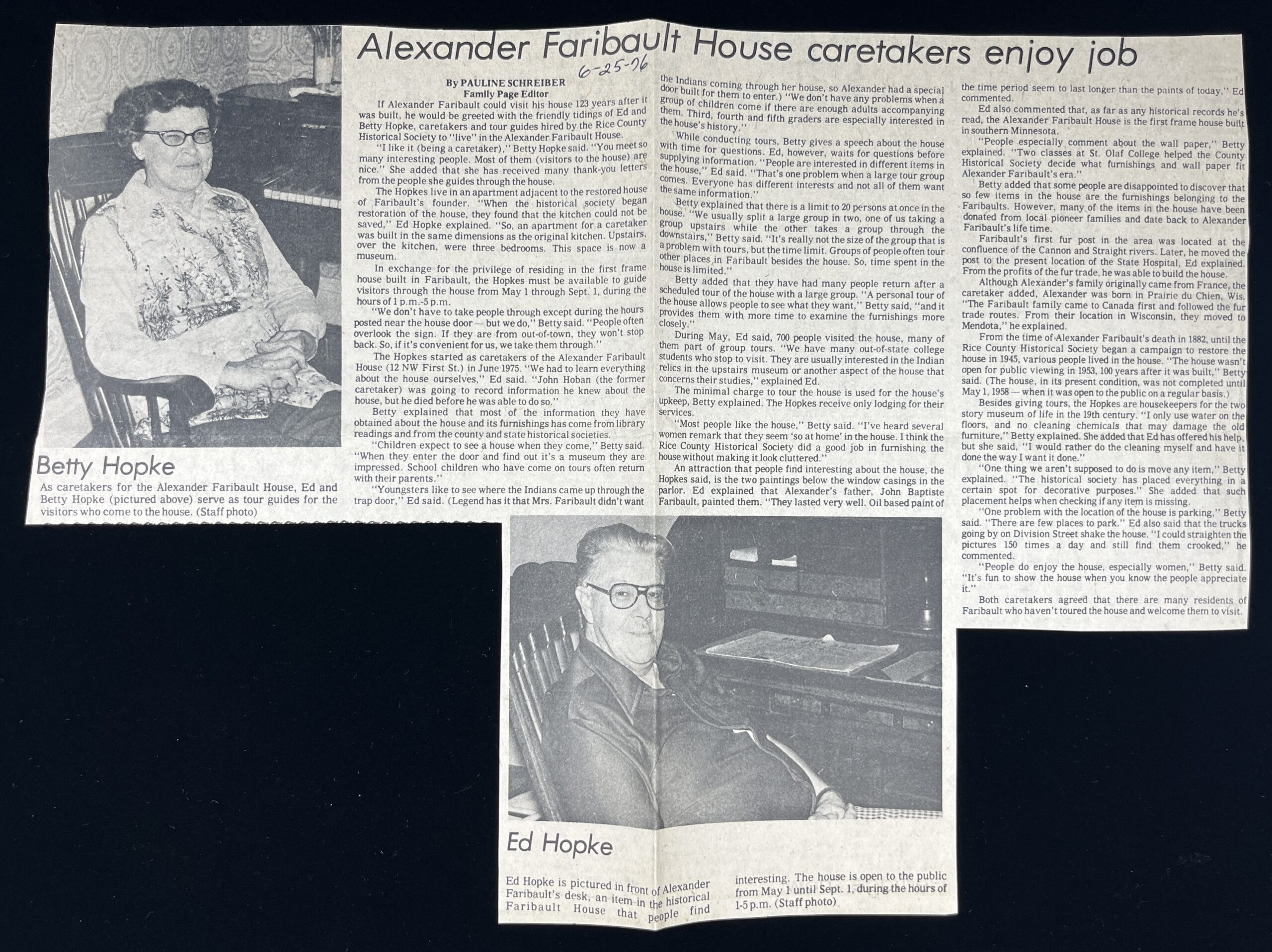
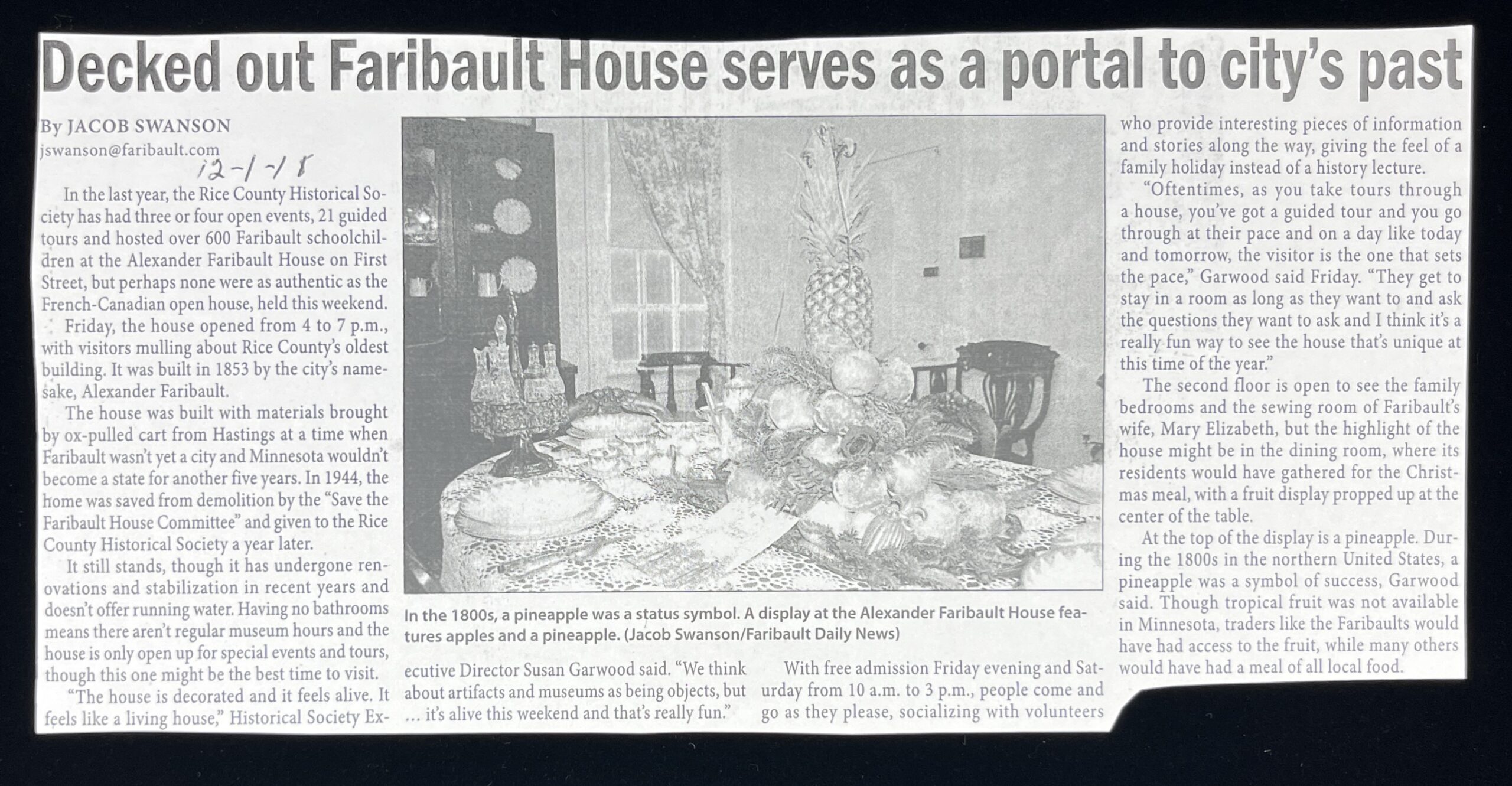
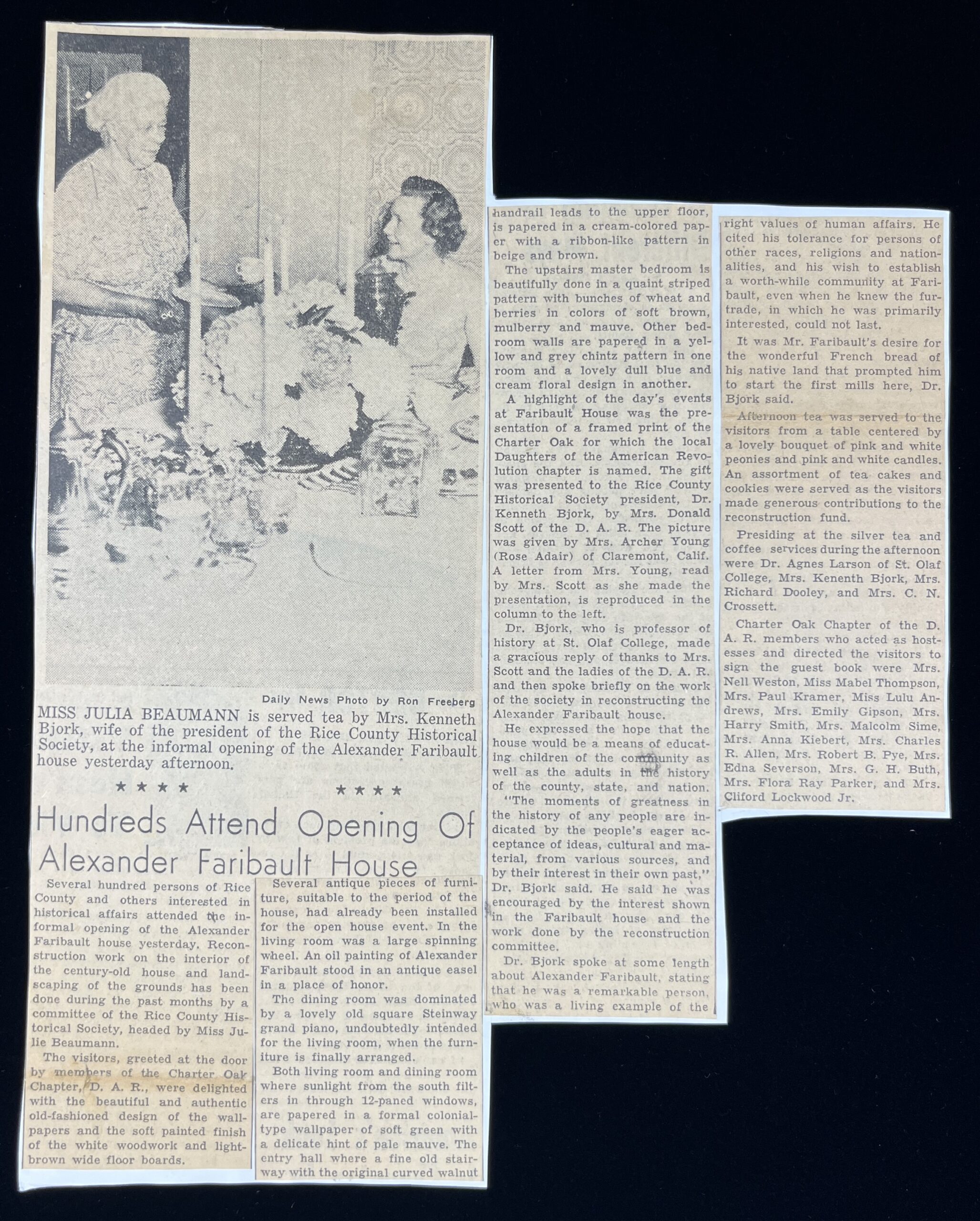
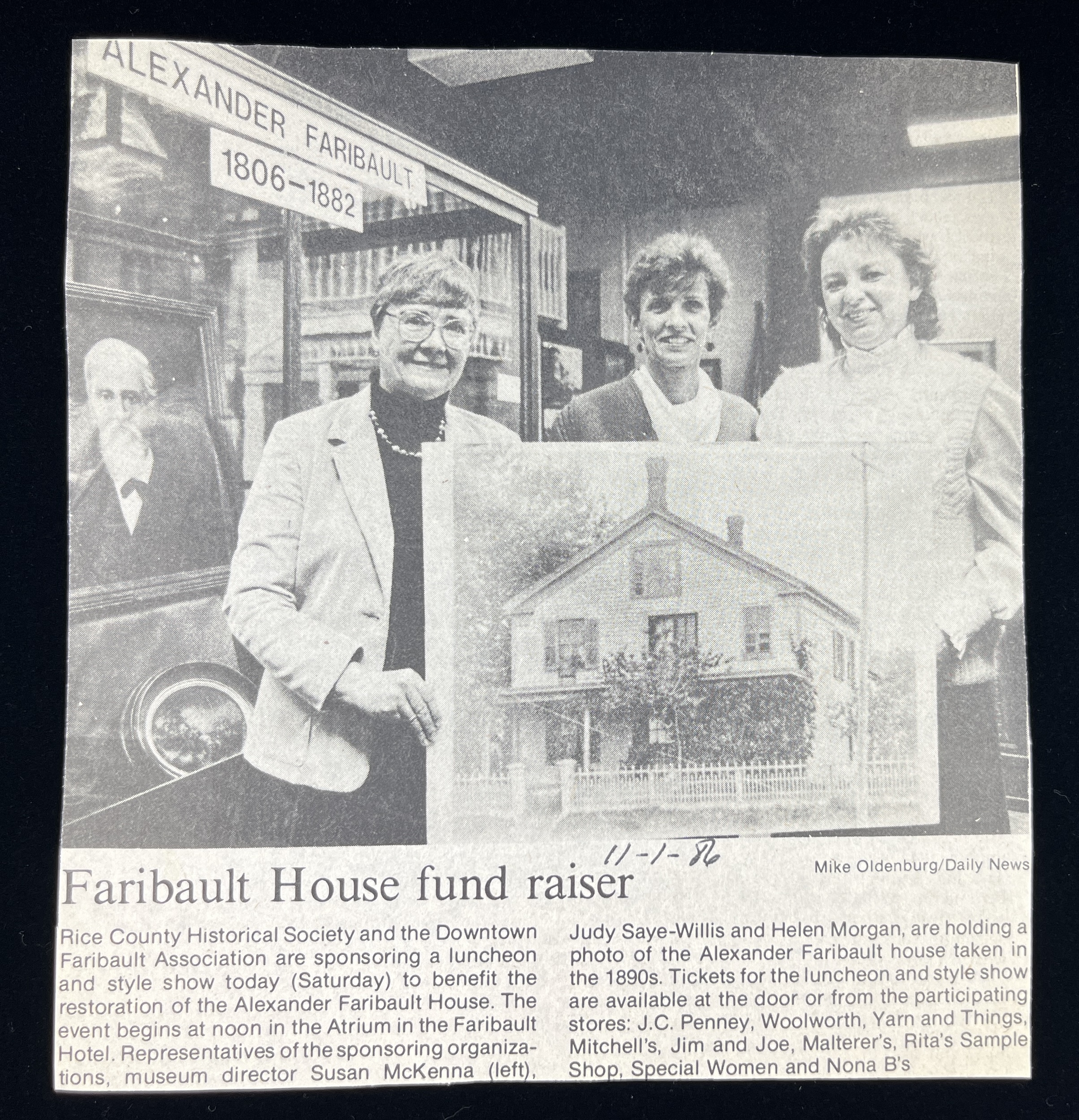
relevant Newspaper clippings
View Gallery
Select an image below for a more detailed zoom