This windy afternoon at about 3:00 P.M, I walked what many would consider the beginning of Downtown Northfield. While I have walked this area many times over throughout my 3 years at Carleton, during this walk I noticed many things that had previously never caught my eye. These new observations led me, in turn, to realize that this area that had become so mundane to me over the years is actually a living and breathing representation of the various communities that inhabit Northfield. While this is a seemingly obvious observation, you will realize its pertinence as I walk you through this area with me.
At the beginning of my walk, I aggressively wiped off my phone camera as I was anxious about capturing all the ‘important’ elements of this area. Moreover, while I knew that what I captured would be a result of my own subjectivity, I found myself worrying about missing ‘objectively’ important things. Nonetheless, I put this anxiety to the side and embarked on my journey, beginning on Washington Street.
Washington Street has a very unique character, with its most significant landmark to many being the Northfield Public Library. While approaching the library, one can’t help to notice the quotes that adorn the sidewalk; I used these quotes to navigate my route around the building, paying close attention to the wisdom they imbued upon observers like myself.
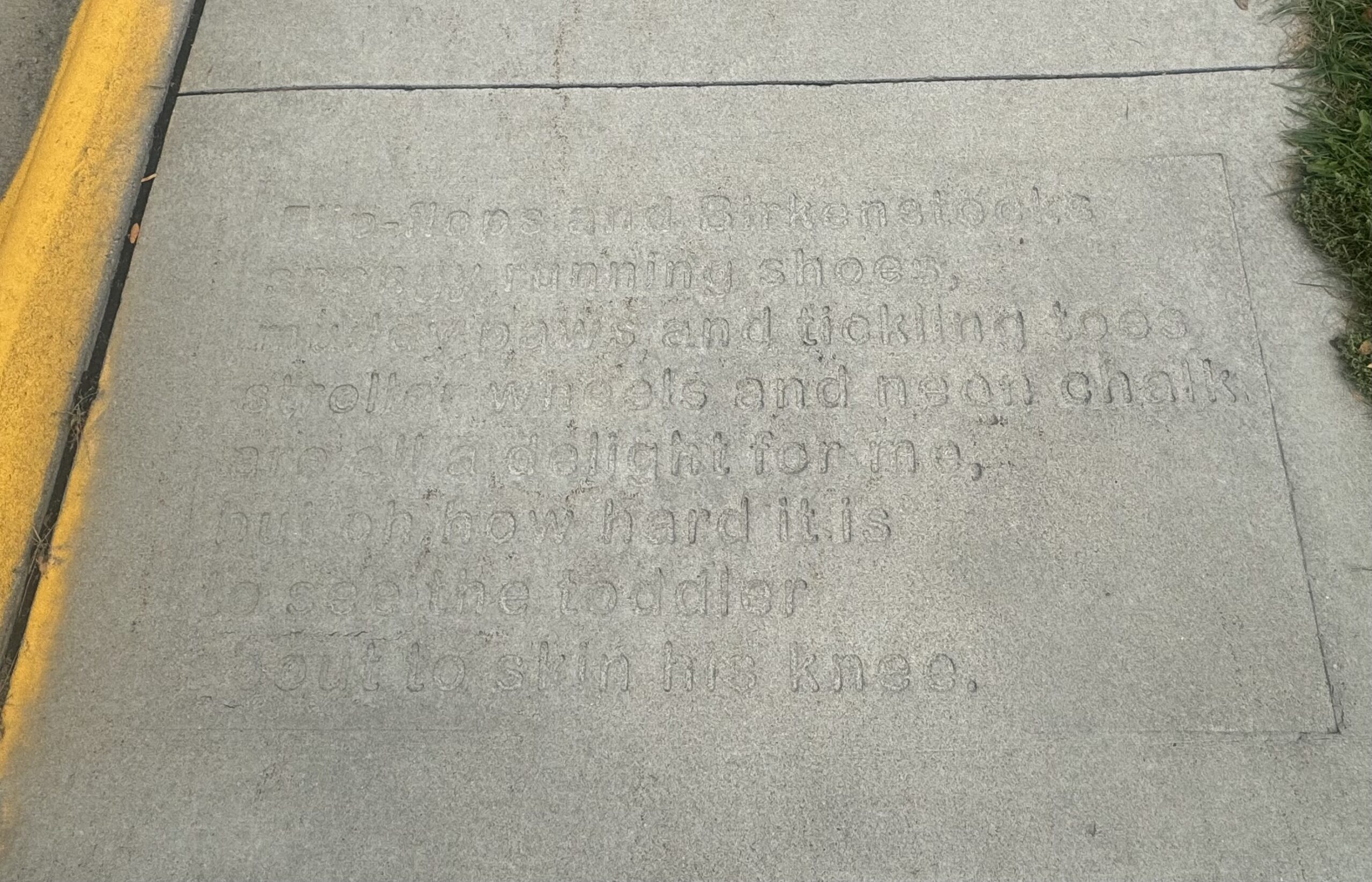
This was the first quote that I saw on the sidewalk, and while it is hard to make out, it made me more diligent about looking at the ground below me as opposed to solely focusing on what was around and/or ahead of me.
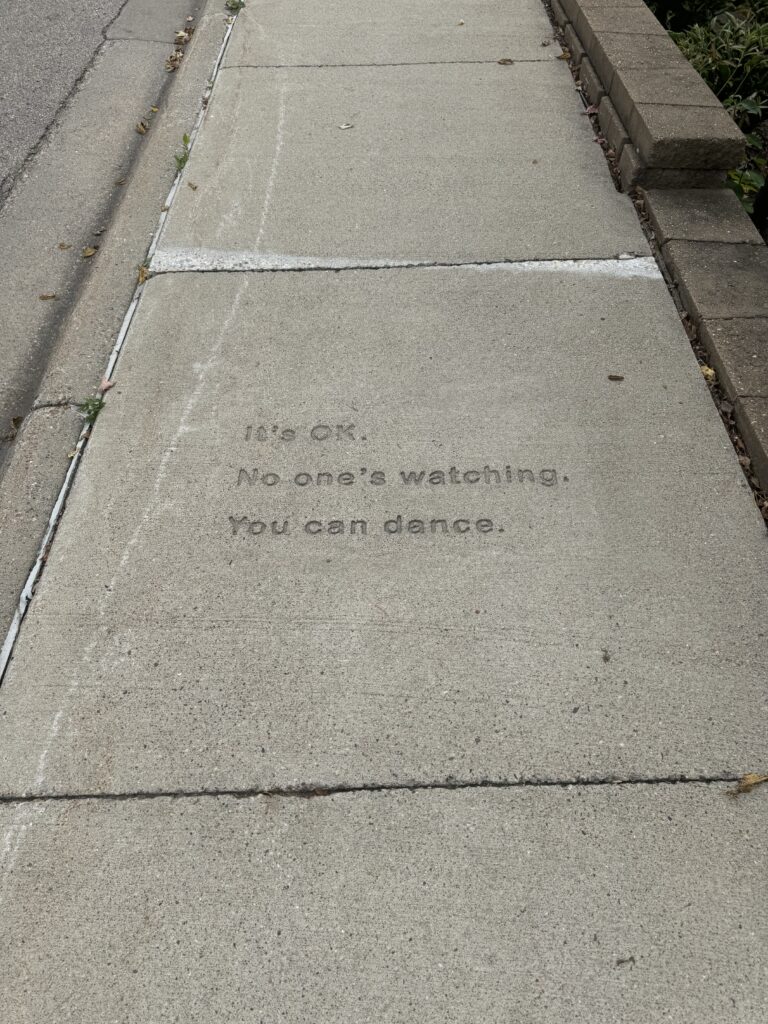
This was the second quote I observed and it served as a helpful reminder to focus on my own lens instead of focusing on how I was being perceived by others as I walked this area. This reminder was echoed in the next sidewalk slab as it read as follows:
“Do not look, but see. Notice the space you fill. You feel nothing, but when you move, every molecule of air parts to let you pass. You are real.”
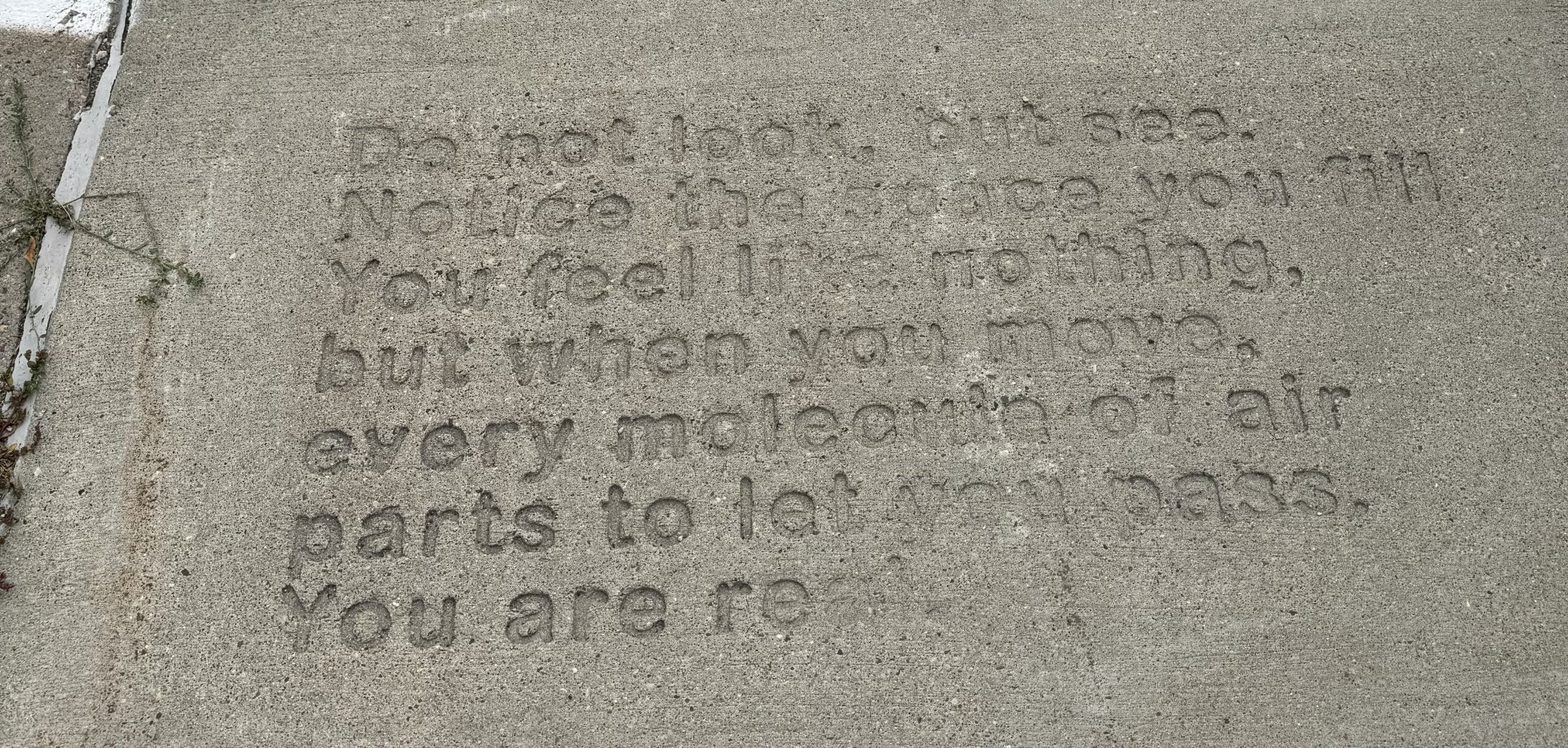
This quote reminded me of the concept of psychogeography, or the study of the effects of a geographical location on the emotions or behavior of an individual. While this was just one detail of the broader geographical area I sojourned, it left a lasting imprint on my lens; rather than focusing on the environment as a stagnant thing, I began to focus on how the environment and my emotions/behavior impacted one another. Feeling as though I had taken a breath of fresh air after reading this, I continued towards the locally prominent Northfield Public Library.
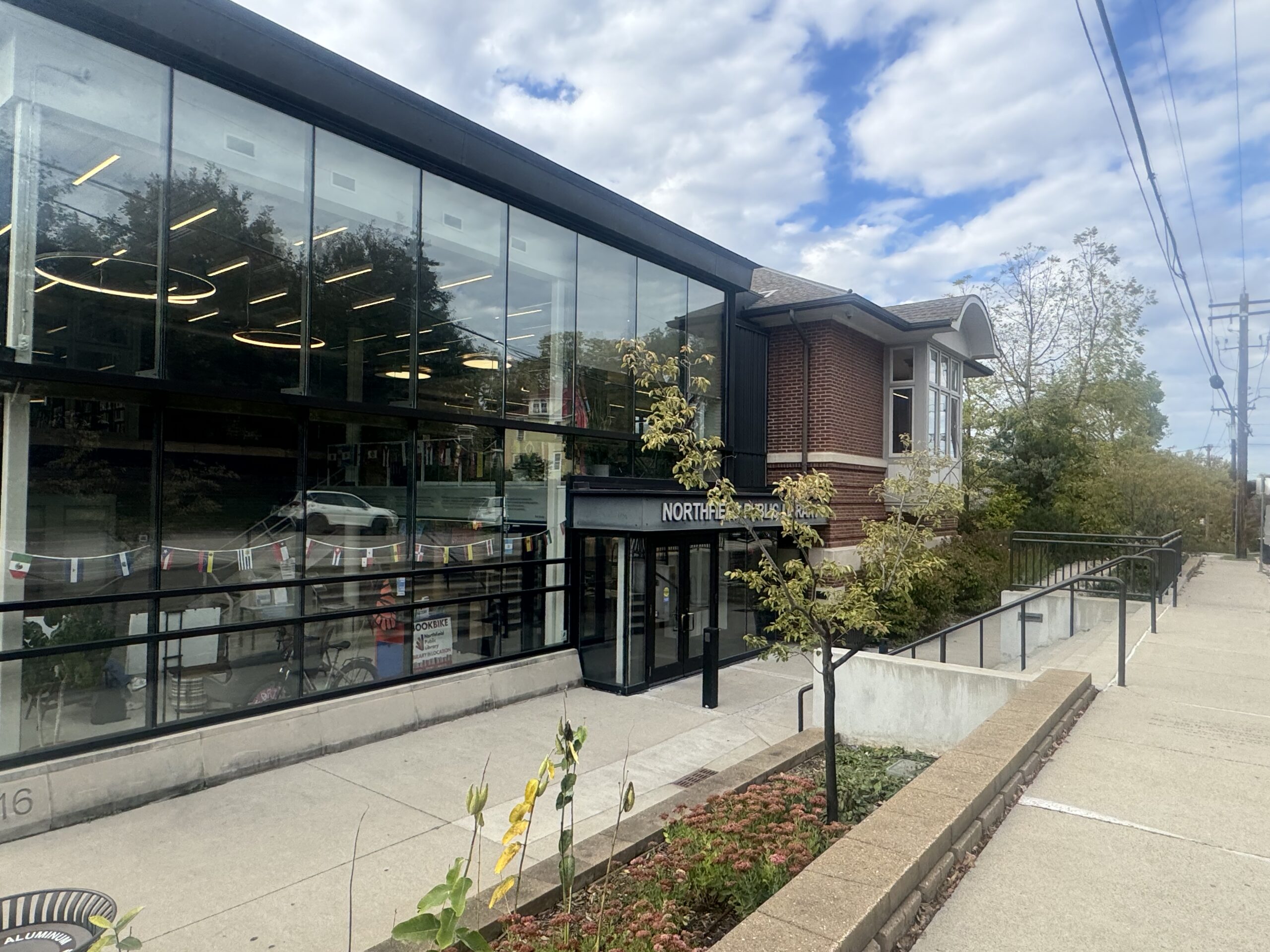
Built in 1910, the Carnegie Library was one of many public libraries (over 2509) funded by the industrialist and philanthropist Andrew Carnegie. The Northfield Library stands today as a testament to Carnegies commitment to educating the public as both its exterior and interior provide wisdom to the public.
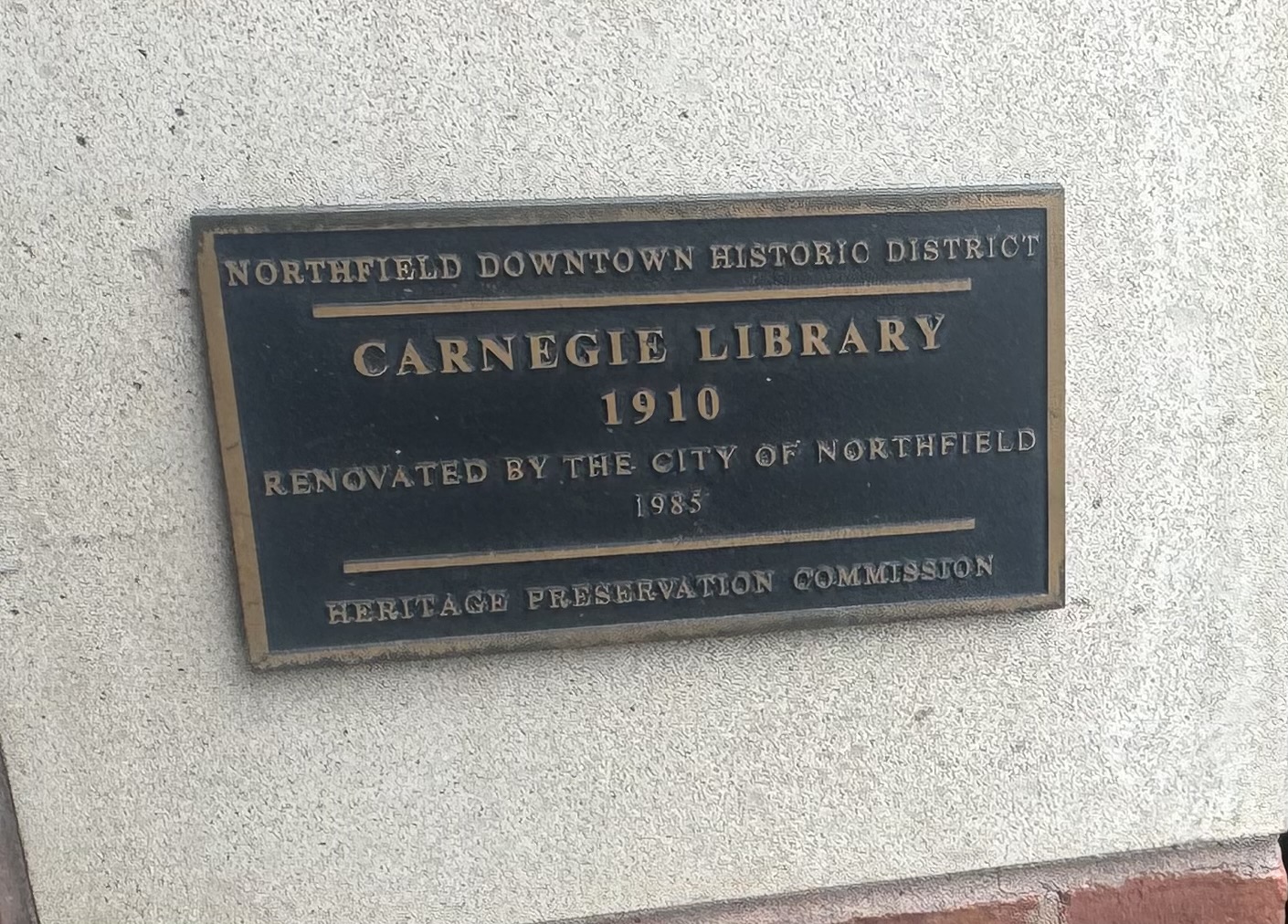
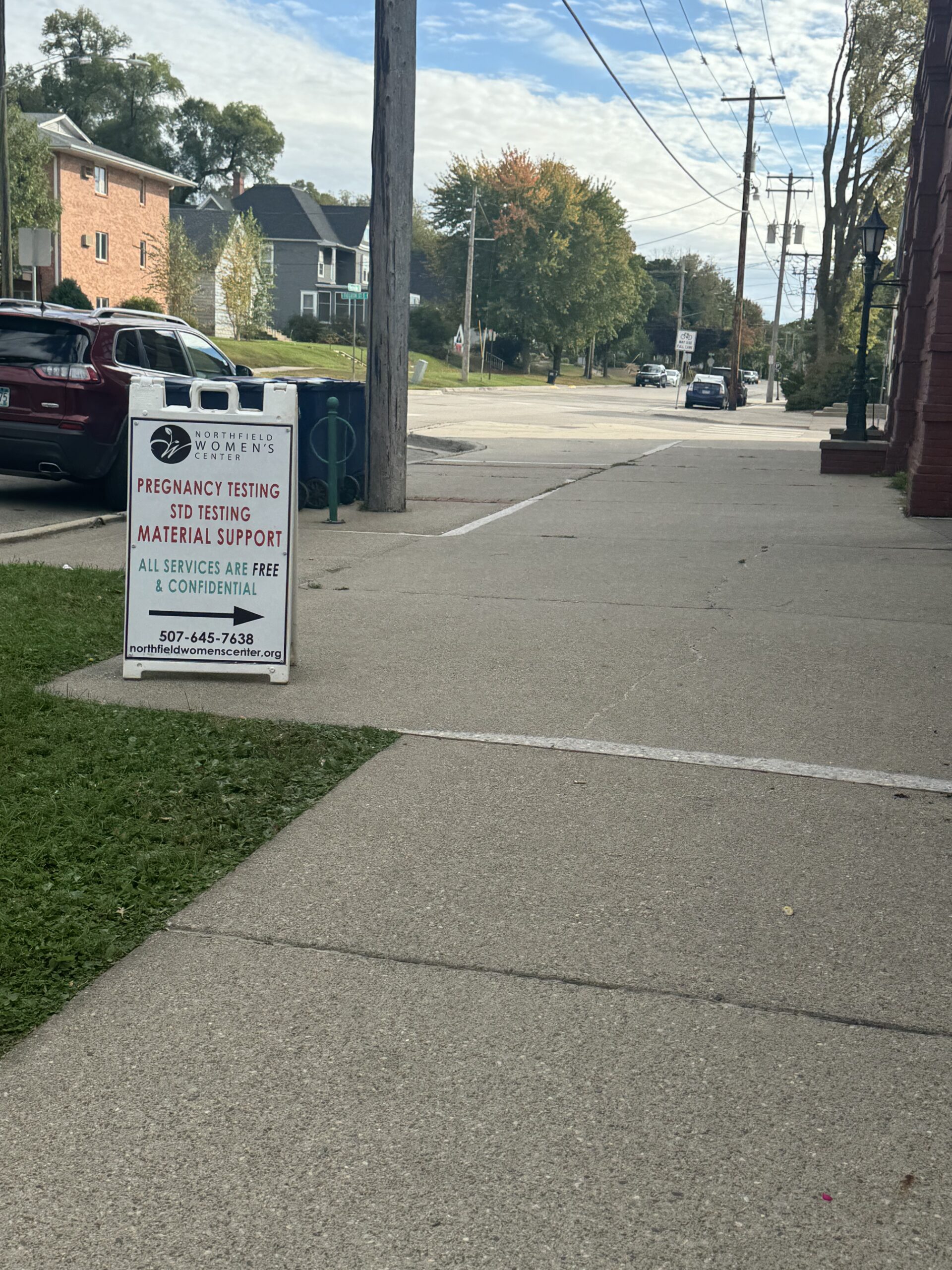
Down the way from the library is another significant landmark in downtown that provides essential services to women, the Northfield Women’s Center. While on the outside the building is seemingly silent, its impact is nonetheless significant as it provides essential material and immaterial care to women in the community.
Shortly down the way from here is the Grand Event Center, a building that has lived many lives since being born in December, 1899. While it was very unsuspecting upon first glance, it became very evident after surveying the building that it had a rich history. From the writing on the bricks, to the commemoration of a life once lived on the build board, it is clear this building is the embodiment of both life and a life once lived; it is hard for one to view this building without imagining its extensive history. One interesting feature of this building is one of its outer-walls that is nestled in an alleyway. On this wall in particular, there are many names and phrases written on the wall; however, it is difficult to tell when these writings on the wall were made.
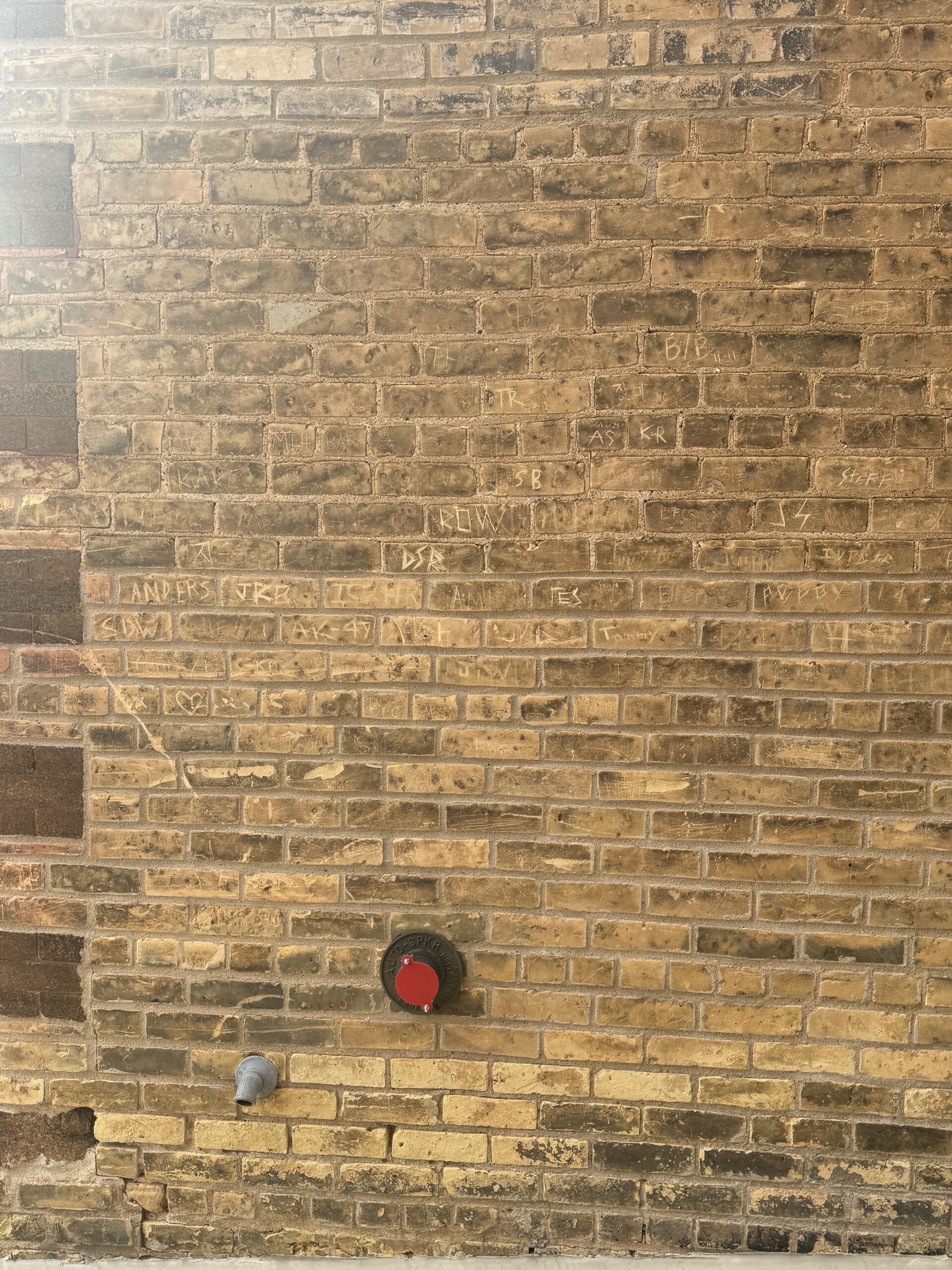
When viewing this, I couldn’t help but want to inscribe part of myself on this wall of memories. Although I did not act on this instinct, it is a testament to this buildings role as a palimpsest of memories that are constantly being written over but never forgotten.
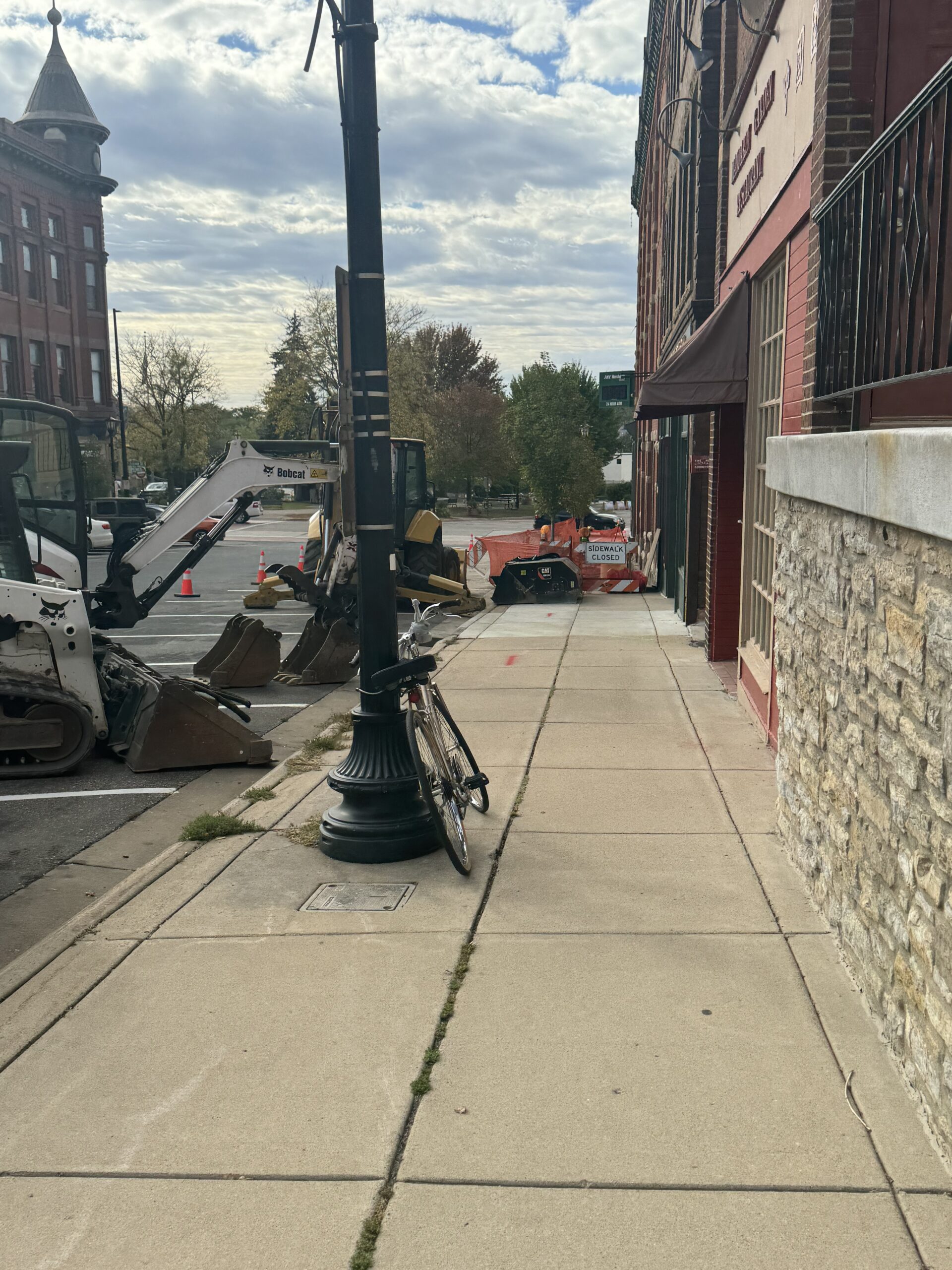
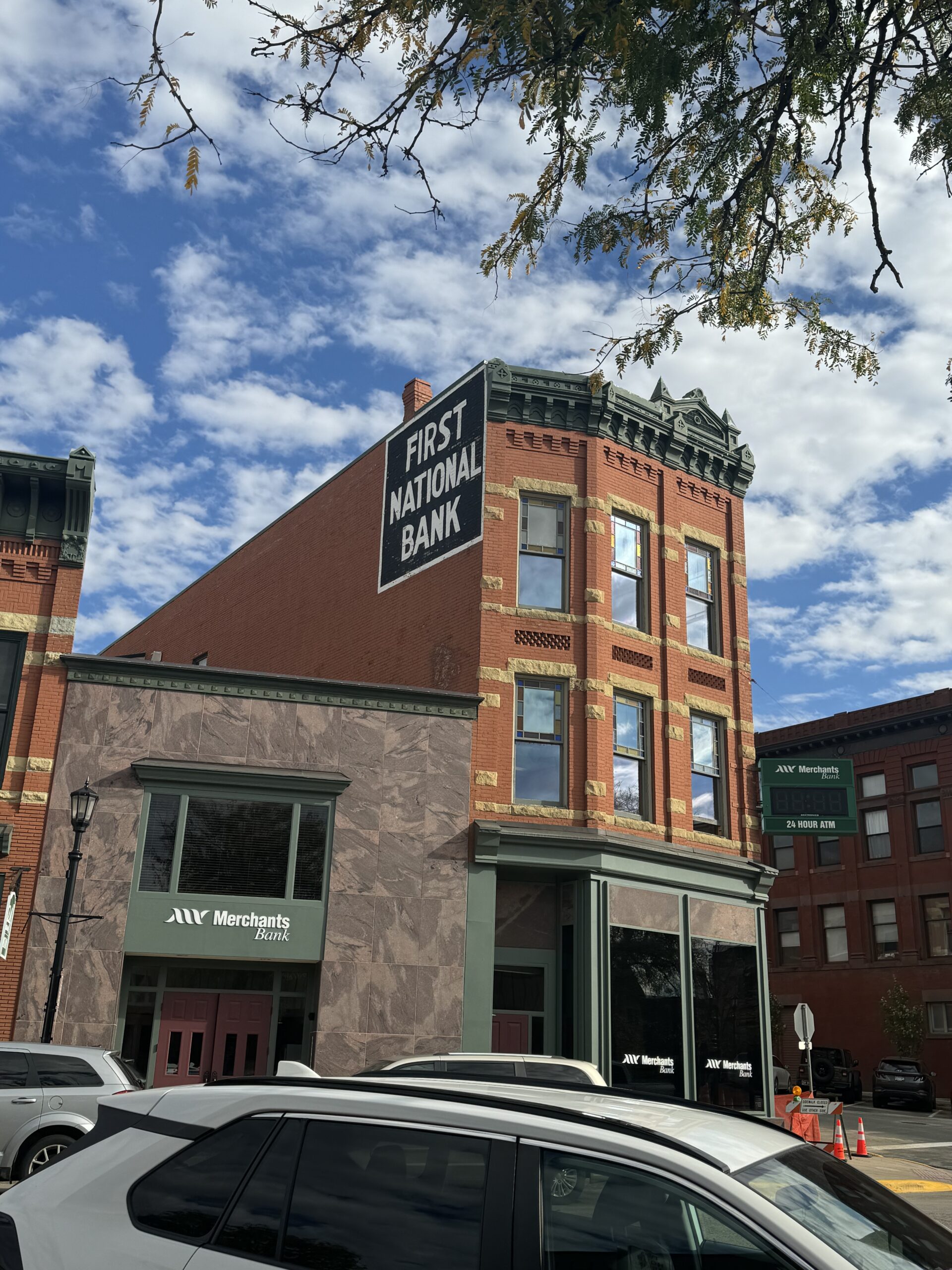
Next to the Grand is an active construction site which caught my eye due to its impermanence and lack of activity; this is evidenced by the absence of construction workers and the abandoned bike on the site. I couldn’t help but think about what changes this construction would add to this landscape, if any. Upon further inspection, however, it seemed as though the work being done was for the general upkeep of the First National Bank’s (see the following picture of the perspective of the bank from around the corner) brick foundation and neighboring sidewalk which I believe is reflective of the broader character of this area that seems resistant to significant change.
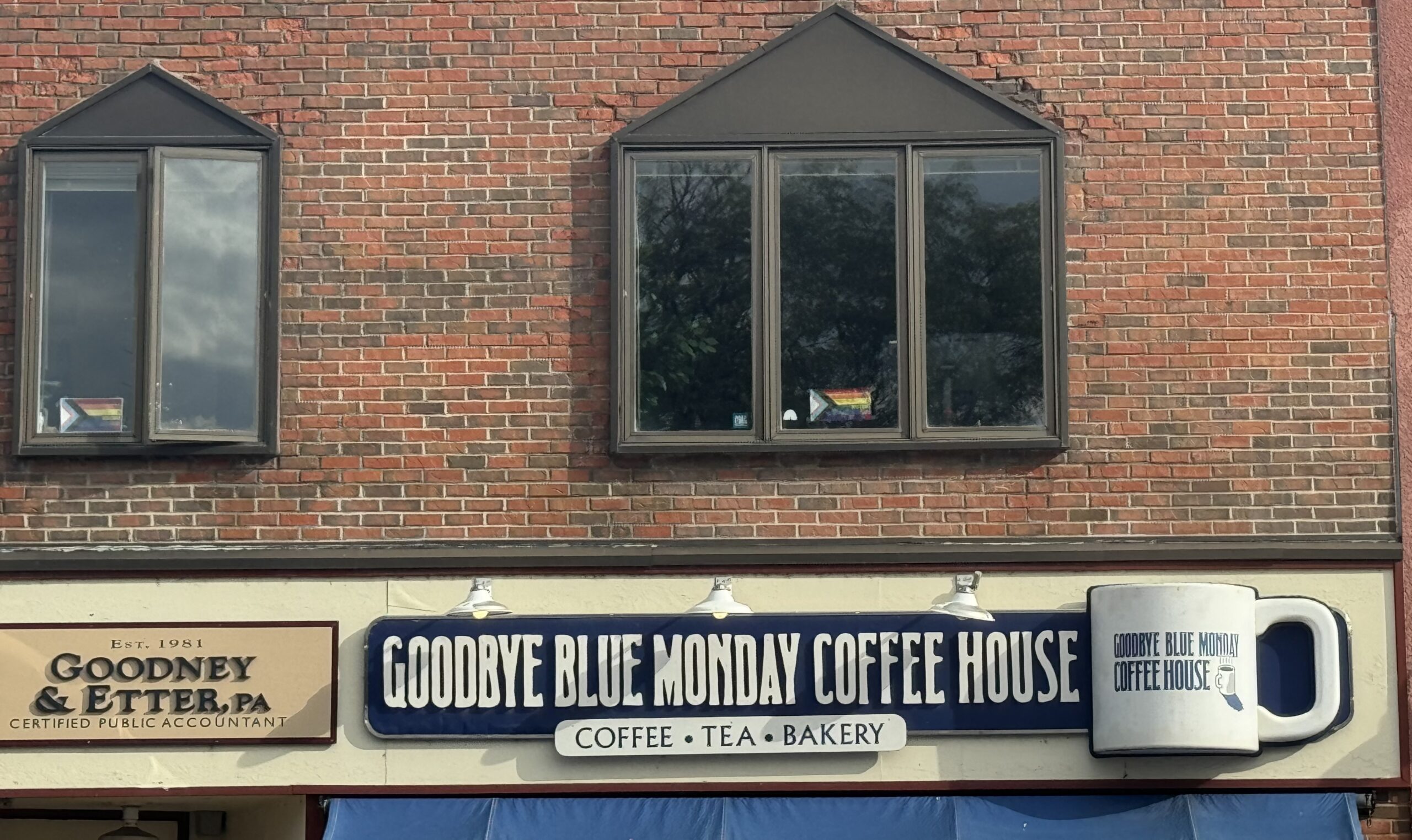
A bit further down is one of this areas most popular coffee shops, Goodbye Blue Monday, that reminds me a lot of my early years at Carleton. However, outside of its nostalgic components, this building stuck out to me due to its multi-functional character that converges both residential and commercial spaces; the upstairs seems to be a residential area/apartment. Moreover, the flag in the upper window caught my attention and led me to think a lot about how business owners incorporate their positionalities and personalities into their storefronts. Additionally, it led me to wonder about what is left unsaid.
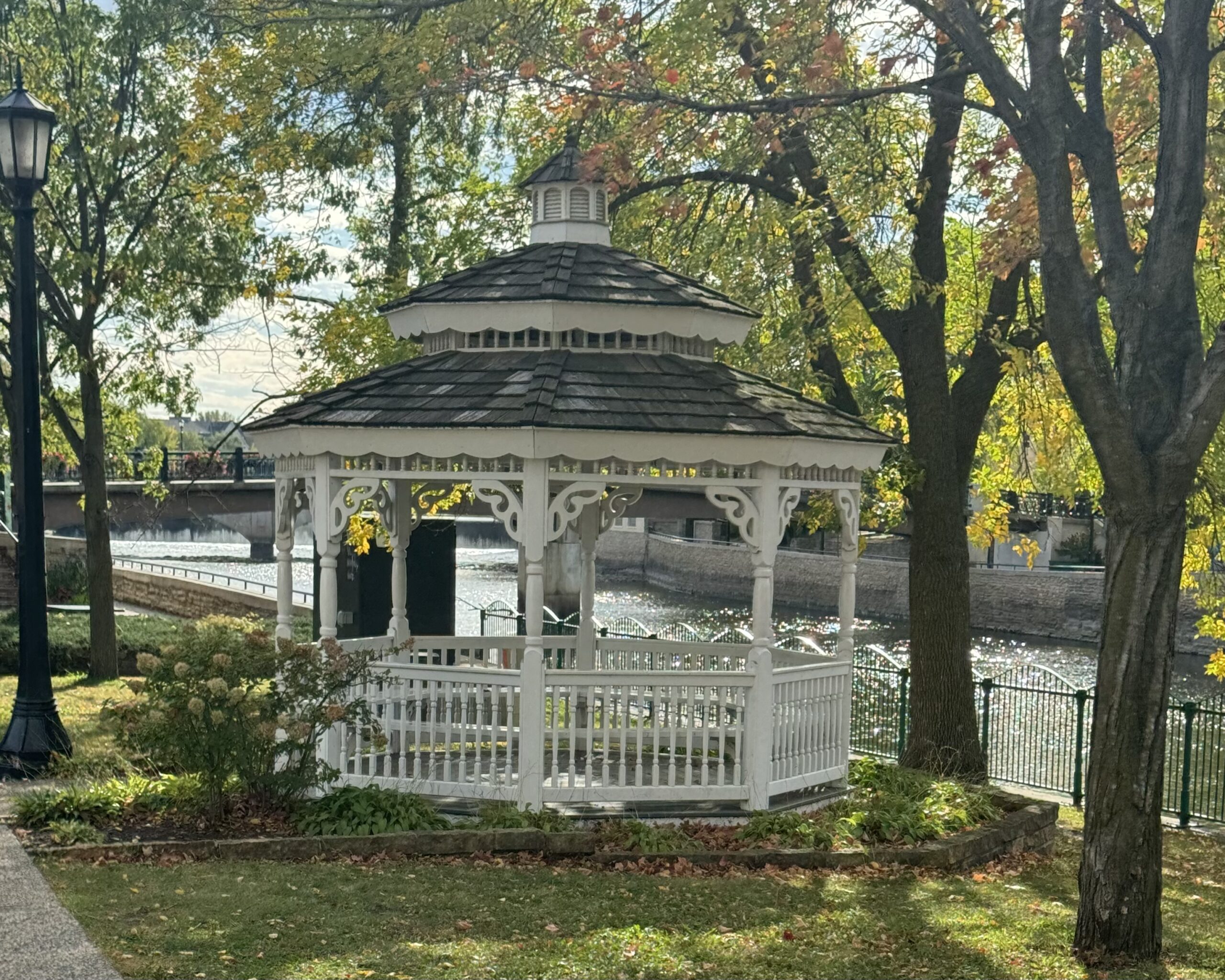
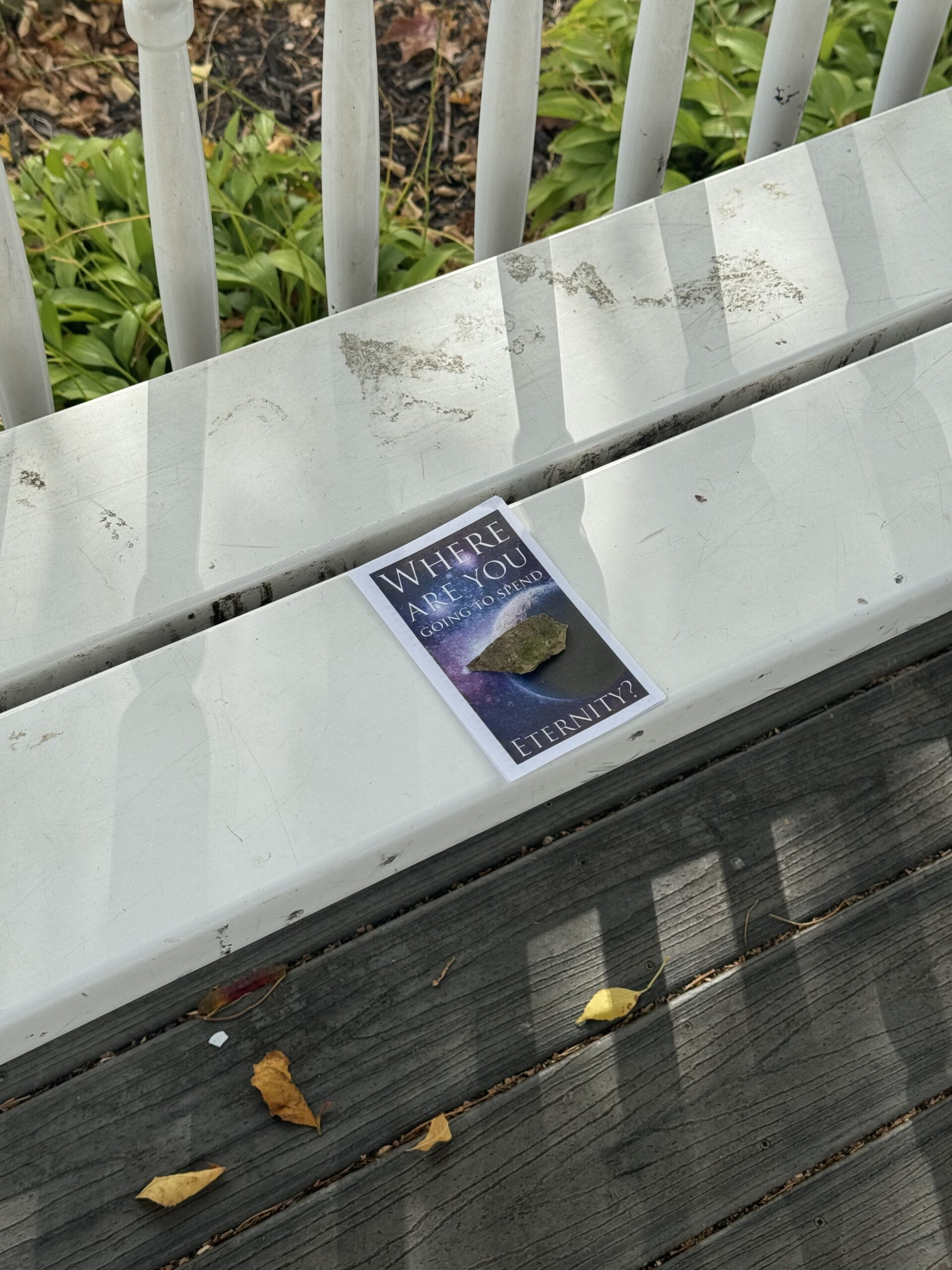
As I neared the rushing, lively cannon river, I couldn’t help but stop in the mini white pavilion that was surrounded by fallen leaves. When entering this space, I immediately noticed a small pamphlet left under a rock on the bench that said “Where are you going to spend eternity,” on the cover. Out of curiosity, I removed the rock from the cover and opened the pamphlet to find information about Christianity and the Bible. While the pamphlets contents were very telling about the person who left it, I began to ponder why they chose this pavilion in particular to leave this pamphlet that held information that must be so close to their heart. While I left with no answers, it made me think that this pavilion in particular is a common place for reflection, like many other places next to calming geographical features such as rivers.
As I walked next to the river I was in awe with the sound of the lively, rushing river that was neatly complimented by murals and other forms of art. Among these art forms, I found particular interest in these two murals that told different stories about the river:
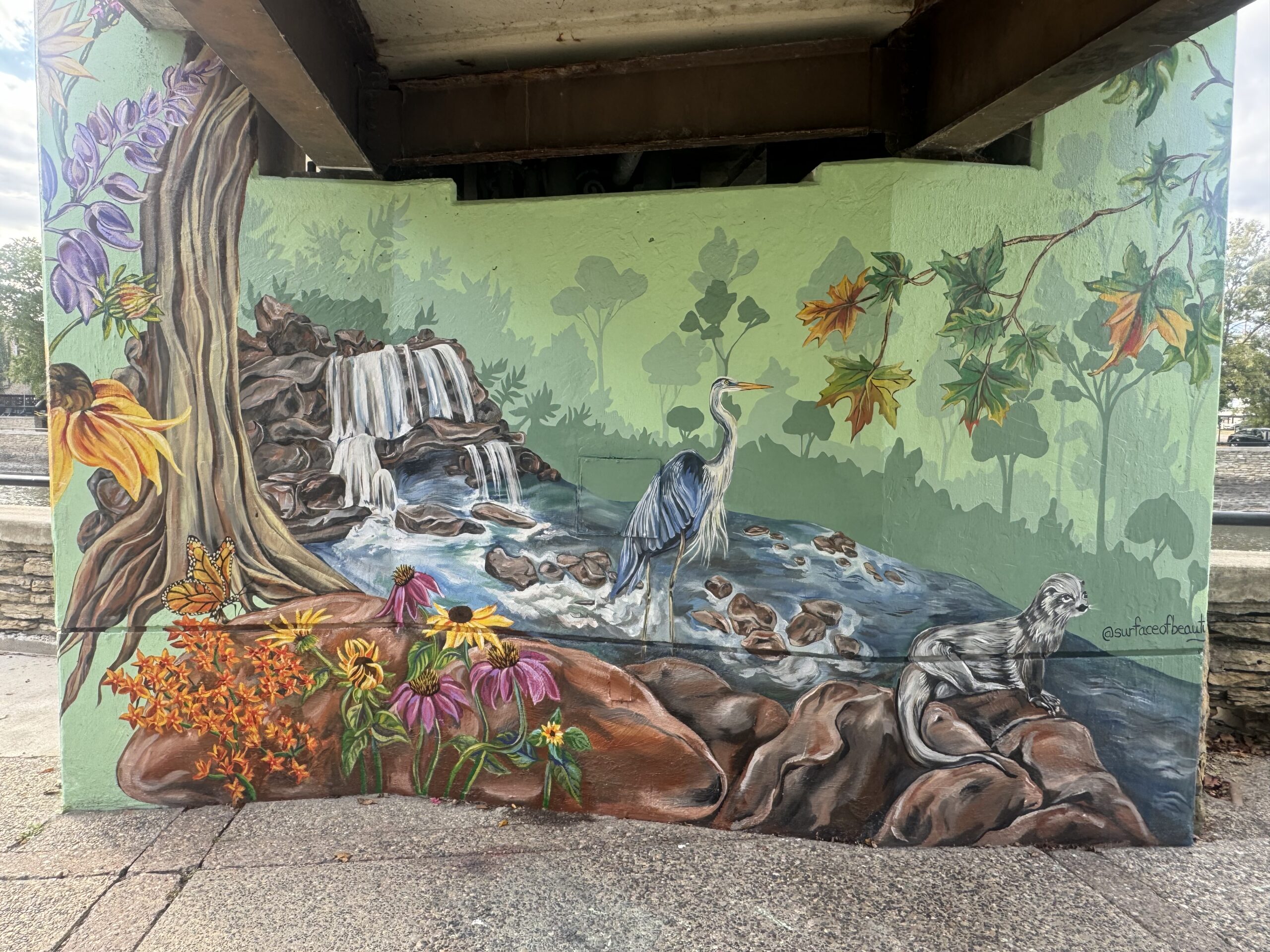
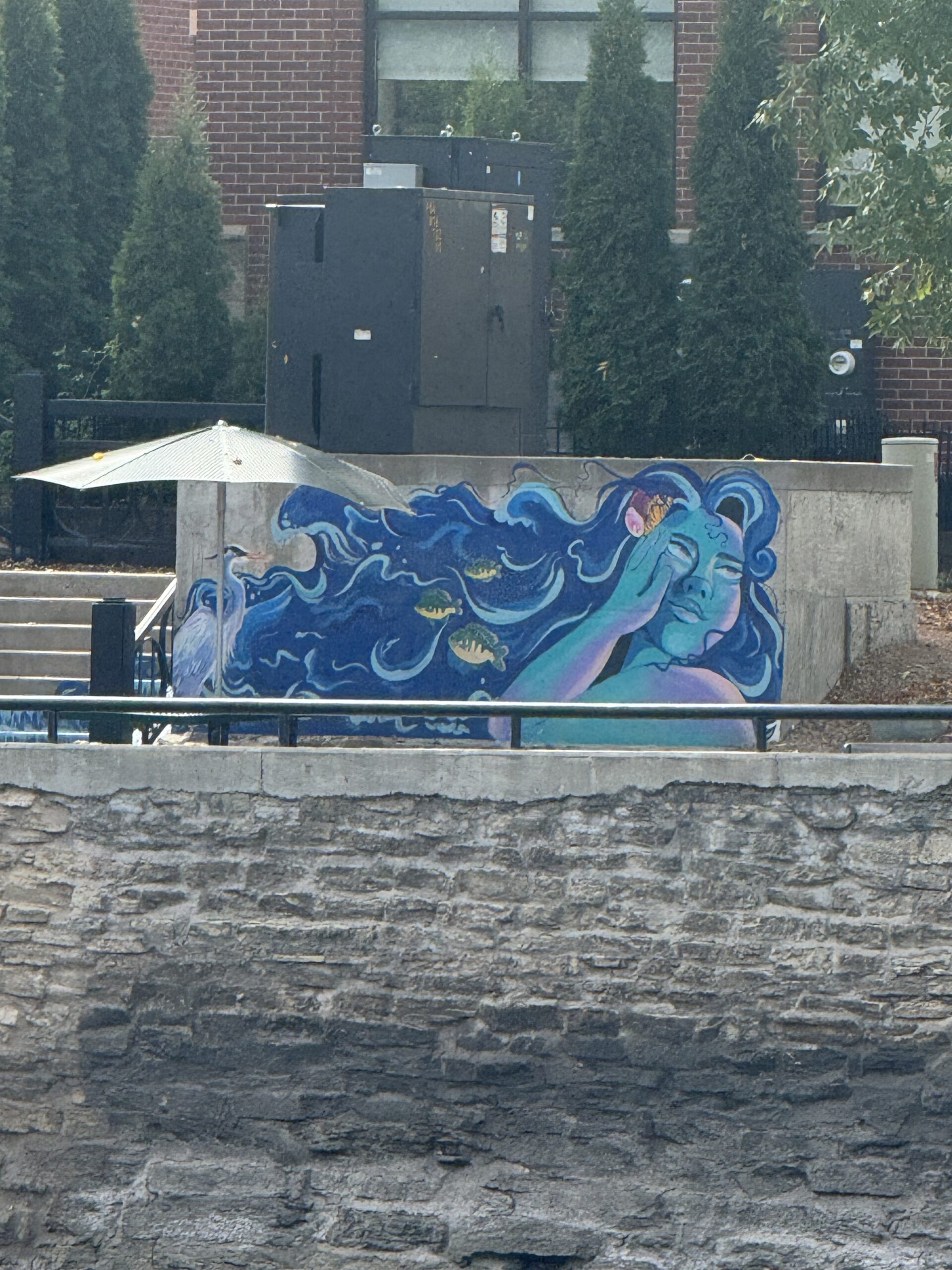
While the first mural seems to tell a story about the wild life that inhabits the river and river bed, the second one seems to anthropomorphize the river into a living, breathing thing; given that this painting displays the river as a woman, I wonder why the painter made this deliberate choice to feminize the river. (Could it potentially be because femininity is often associated with beauty and delicate things? I have no idea, but this is one of my hypotheses).
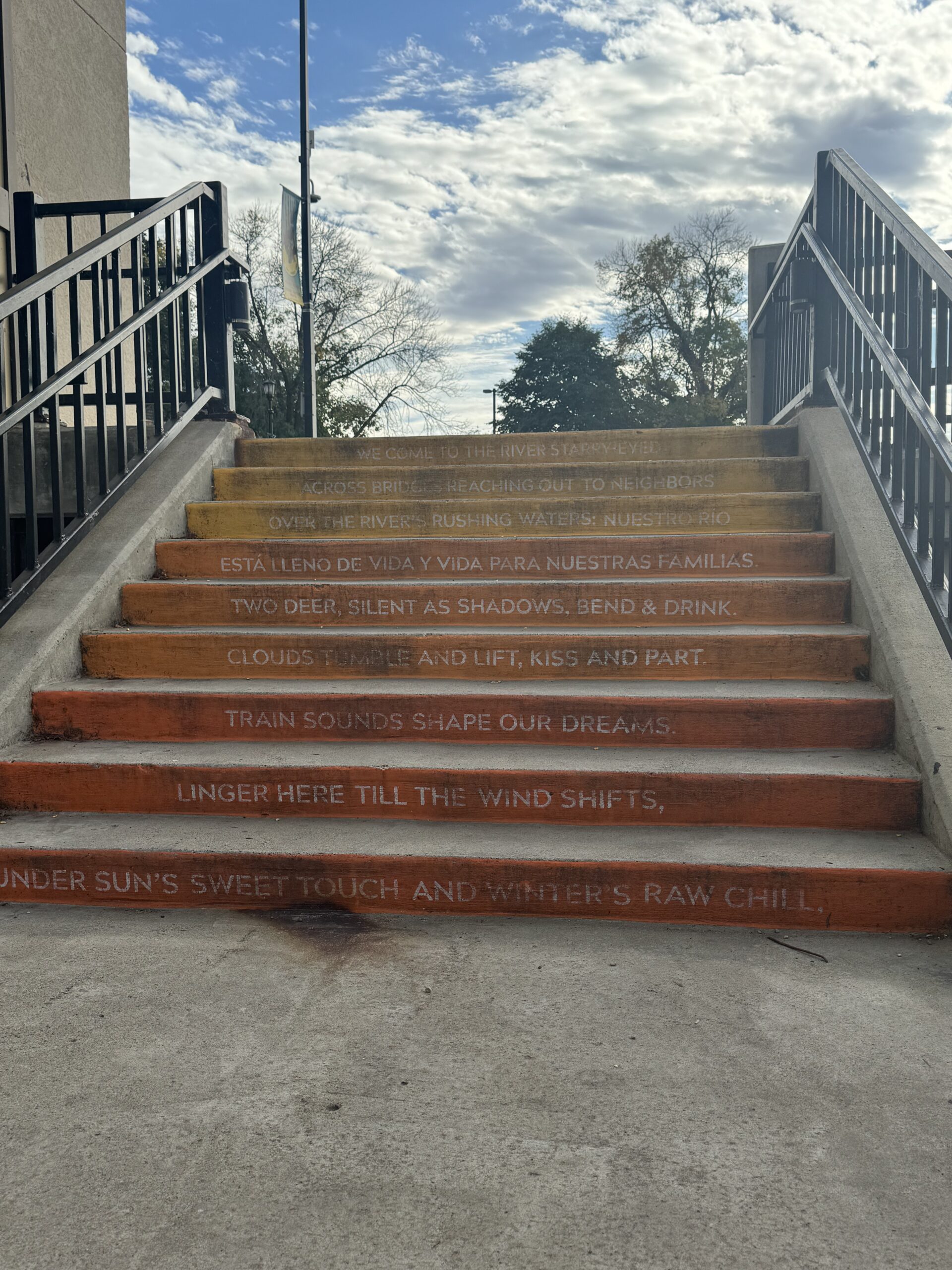
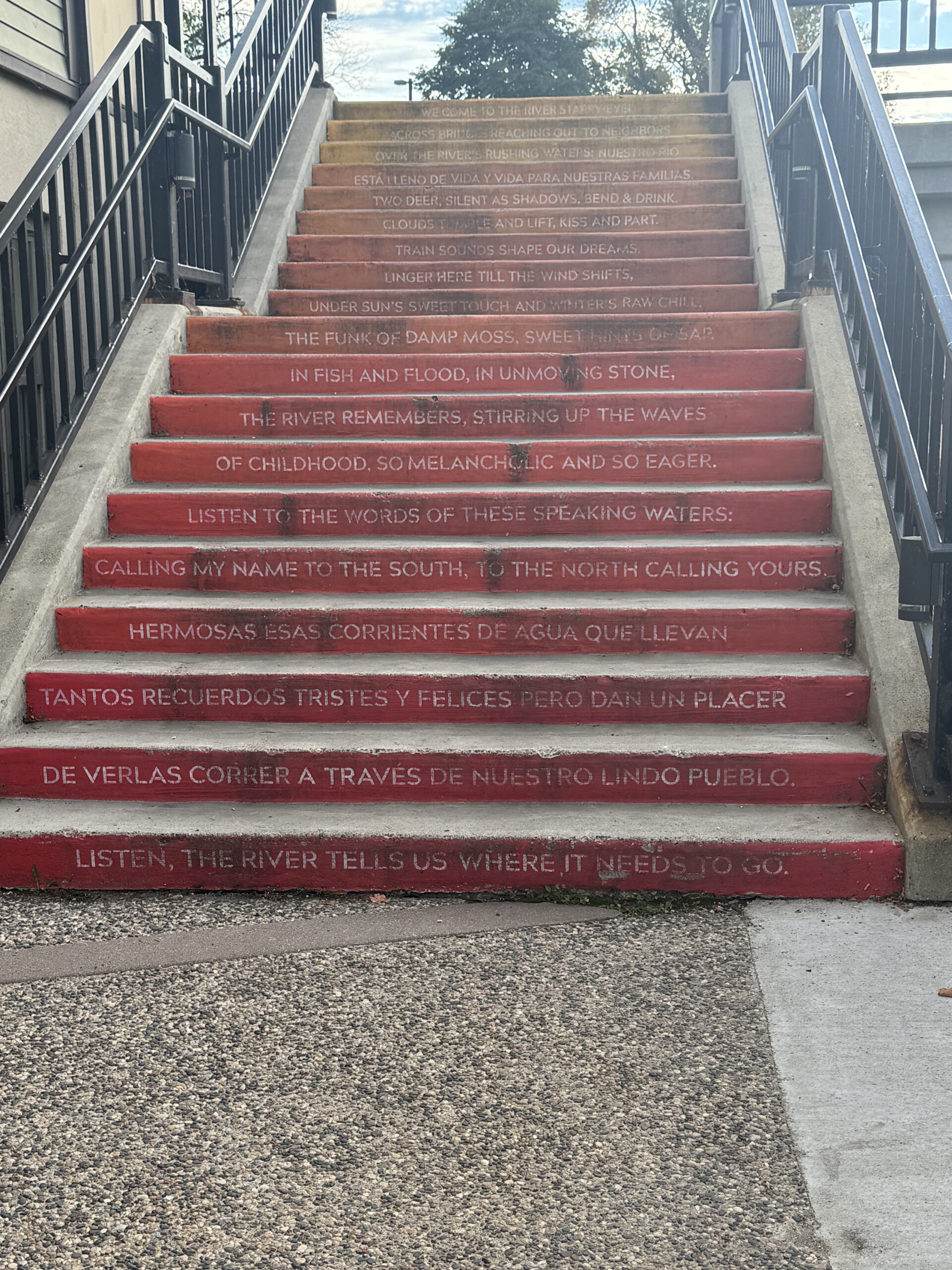
At the end of my walk, I was met with this beautiful poem that neatly summarized my emotions throughout this calm and reflective portion of my walk that was serenaded by the lulls of the river. One line that stuck out in particular was “the river remembers” as this statement maps onto the rest of my walk that pushed and pulled me between both the past and present of Downtown Northfield. Moreover, similar to rivers, I believe that all geographic areas hold memories that can be found if one looks deep enough — this is something I came to realize during my careful analysis of this region of downtown Northfield.
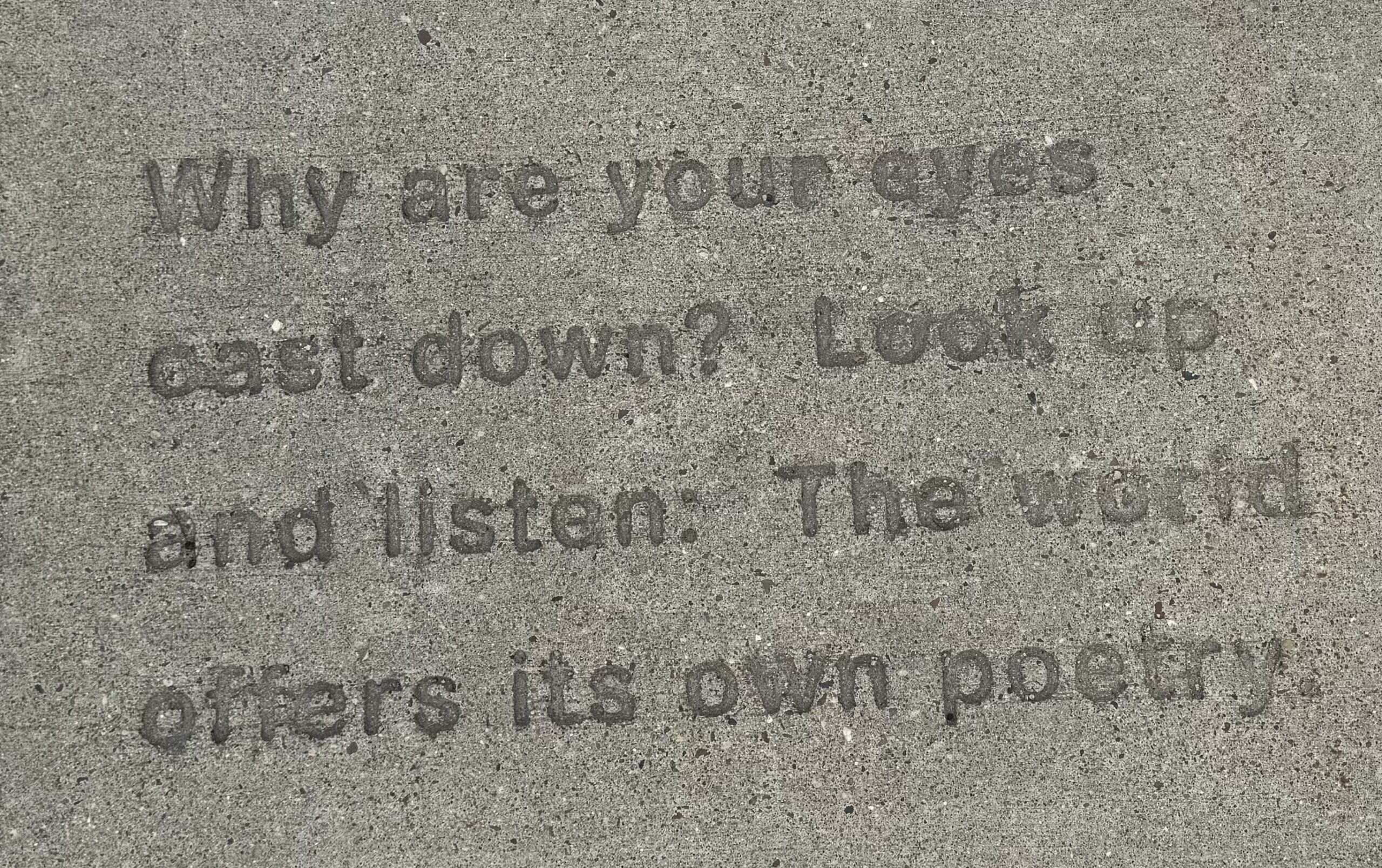
Leaving this walk, I want to leave readers with this insightful quote I saw on the sidewalk:
“Why are your eyes cast down? Look up and listen: The world offers its own poetry.”
Link to my map:
https://www.google.com/maps/d/u/0/edit?mid=1Fr24BTJEOWv3XhBmG3FpsZ1ngrsFBW8&usp=sharing
